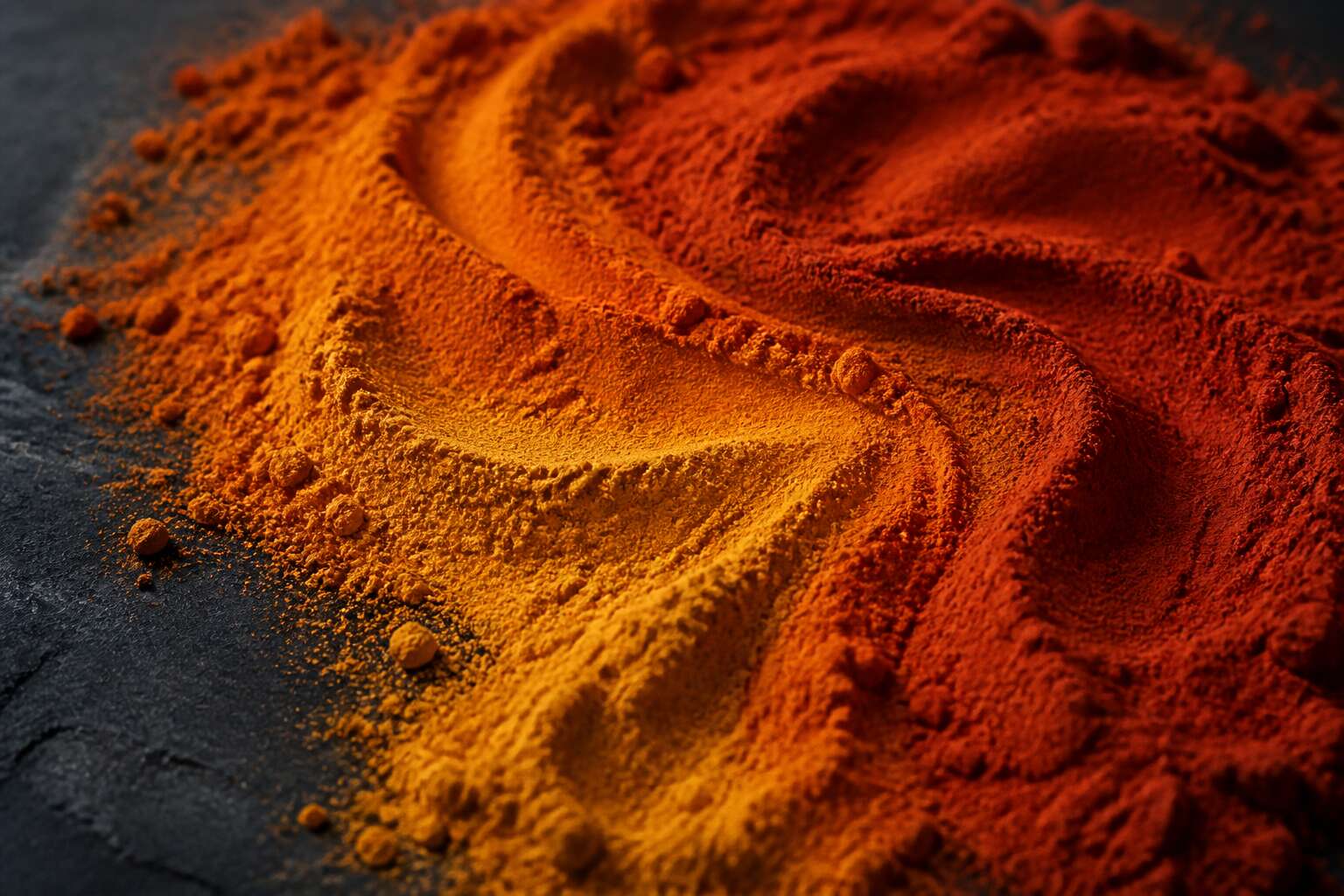
The Chemistry Behind Iron-Based Colorants
Understanding Oxidation States and Their Role in Shade Formation
The difference between yellow ochre and red iron oxide is one electron. That electron’s presence or absence is the oxidation state, the core of every pigment with iron.
Ferrous iron, Fe2+, produces greys and greens. Ferric iron, Fe3+, yields ochres and umbers. The ratio between them creates the final hue. Magnetite contains both states, producing a black used in South African rock art for centuries.
Oxidation states influence shade in specific ways:
- Fe2+ absorbs longer wavelengths, giving teal and green.
- Fe3+ reflects longer wavelengths, giving red and yellow.
Temperature and pH during formation lock in these states. The same chemical formula can appear as a brilliant orange or a dull rust. Understanding this chemistry lets manufacturers predict color, not guess it!
Natural Versus Synthetic Production: A Comparative Look
Natural iron oxides are extracted from earth deposits in regions like the Northern Cape. These minerals undergo crushing, washing, and milling before becoming a usable pigment with iron as the primary chromophore. Synthetic routes involve precipitating iron salts under controlled temperature and pH.
The production method determines particle morphology. Natural pigments retain irregular shapes and trace impurities. Synthetic versions offer uniform spherical particles, which improve dispersion in paints and plastics.
Consider these trade-offs:
– Natural: geological variability, earthy tonality, lower processing cost
– Synthetic: batch consistency, brighter hues, higher energy input
Both pathways deliver a durable pigment with iron that resists UV degradation. The choice hinges on application requirements, from architectural coatings to ceramic glazes.
Key Iron Compounds: Oxides, Hydroxides, and Oxyhydroxides
Iron compounds are the quiet aristocrats of the colour world. They do not shout, yet they command every ochre, sienna, and umber on your palette. The chemistry is deceptively simple. Hematite delivers red, goethite yields yellow, and magnetite gives black. These are not mere pigments; they are geological memoirs written in molecular form.
The oxide family forms the backbone of any serious pigment with iron. Red iron oxide, or Fe₂O₃, remains the workhorse for its thermal stability and opacity. The hydroxides, such as goethite, bring that sunbaked yellow warmth favoured in South African architecture. Then we have the oxyhydroxides, the charmed middle children, offering transparency and a lively tinting strength that artists prize.
Each compound possesses a distinct crystalline architecture. That structure determines light absorption, particle size, and ultimately the shade we perceive. Consider the following characteristics:
- Hematite exhibits exceptional hiding power and chemical resistance
- Goethite provides a cooler yellow with higher oil absorption
- Magnetite offers magnetic properties useful in specialty coatings
The practical implications matter. A pigment with iron that functions flawlessly in a ceramic glaze may perform poorly in a high-gloss automotive finish. The difference lies in these structural nuances, not in marketing folklore. When you select a pigment, you are essentially choosing a specific crystalline personality, one that will interact with binders, solvents, and ultraviolet light in its own stubborn way.
The durability of these compounds explains their ancient pedigree. Cave paintings survive because iron oxides refuse to fade. This permanence, paired with modern synthetic control, allows manufacturers to offer consistent earthy tones without sacrificing performance. The resulting palette feels honest, grounded in chemistry rather than trend.
The Influence of Crystal Structure on Final Color Outcome
We tend to assume color comes from chemistry alone. Iron atoms prove otherwise. Their arrangement, rather than the element itself, determines the final hue. Two samples of pigment with iron can share identical formulas yet render entirely different colors because their crystal structures diverge.
The lattice governs how electrons absorb and release light. A compressed structure shifts the wavelength toward red; an open structure leans yellow. This explains why manufacturers control cooling rates and milling conditions so carefully.
- Particle size changes light scattering
- Crystal defects produce distinct earthy tones
- Lattice distortion alters absorption bands
For South African coating and ceramic producers, this structural awareness separates guesswork from precision. A pigment with iron chosen for a facade must withstand harsh UV while holding its intended shade. Crystal structure makes that promise possible.
Exploring the Earth Tone Palette: From Ochre to Jet Black
Ochres and Yellows: The Warmth of Goethite
The earliest recorded use of a pigment with iron traces back to the ochre found in South Africa’s Blombos Cave, dating over 70,000 years ago. This ancient earth, still vital today, owes its palette to the subtle oxidation of goethite. The mineral does not blare its presence; instead, it whispers in frequencies of ochre and sienna, grounding the landscape in quiet warmth.
These yellow-brown hues possess a particular gravity, a sunburnt quality that stabilises a composition. As the iron oxidises, the shades deepen, shifting from pale gold to rich amber. The colour is not static, it breathes with the light, offering a solid anchor that feels both ancient and immediate. This particular form of ochre weathers with a dignified patience.
When we examine the broader family of iron earths, we find a spectrum that moves from the luminous into the shadows:
– Raw sienna, harvested for its translucent golden glow.
– Yellow ochre, the foundational earth of classical frescoes.
– Umber, both raw and burnt, which pulls the palette toward the darker, more brooding browns.
The darkness arrives through heat. When goethite is roasted, it surrenders its water molecules and transforms into haematite, shedding its sunny temperament for a deeper, more introspective red. Yet the transition is gradual, and the intermediate stages present a remarkable range of browns, each one a testimony to the mineral’s chemical memory. Ultimately, this pigment with iron remains the baseline of the earth tone scale, a foundation for human expression since the first handprints marked a cave wall.
Siennas and Umbers: Raw and Burnt Variations
Raw sienna holds a shy golden tone, still wet with moisture. Heat that sienna and you expel the water. The pigment with iron then turns a deeper orange red. Burnt sienna carries weight and permanence that raw simply cannot.
Umbers start even darker. Raw umber has a cool olive cast. It feels like a shadow. Roast the earth and its heart shifts to a warm chocolate brown. The process is simple. The result is enduring.
- Raw sienna: pale gold, translucent
- Burnt sienna: rust red, denser
- Raw umber: brown with green undertone
- Burnt umber: toasty warm brown
I have mixed both varieties side by side. The raw versions stay passive and airy. The burnt versions gather weight and focus. For a constant, reliable base, this pigment with iron delivers every variation we might need.
Terracotta and Venetian Reds: The Hematite Connection
Hematite is the crystalline form of iron oxide, and it drives the deepest reds in the earth tone palette. Terracotta and Venetian reds both rely on this pigment with iron, yet they differ in preparation and particle size.
Terracotta comes from fired clay, its hue shifting from orange to brick as the kiln heats. Venetian red, by contrast, is a synthetic hematite, ground fine for a uniform, opaque finish. I have used both in studio work; the terracotta feels gritty and variable, while Venetian red sits flat and deliberate.
- Terracotta: warm, earthy, variable
- Venetian red: cool, stable, consistent
Hematite anchors the reds with a permanence that raw earth cannot match, completing the spectrum from ochre to jet black.
Brown and Black Iron Compounds for Depth and Contrast
In the Cradle of Humankind, ochre and black iron dust were ground together to paint shadows on rock. That ancient pairing remains essential today. Brown and black iron compounds add depth to any palette. A fine magnetite particle, black iron oxide, darkens shadows effectively; while synthetic Mars brown delivers a stable, neutral brown without red undertones.
Unlike natural umbers covered earlier, controlled production of brown iron oxides ensures consistent strength. In my studio, a wash of magnetite under a thin brown layer creates a solid ground. Light scatters across these particles, producing depth that elusive with simple black paint.
These iron pigments serve distinct roles:
- Magnetite: dense, opaque jet black
- Mars brown: uniform, transparent brown
- Brown ochre: granulating, natural variation
Choosing a pigment with iron guarantees permanence. These oxides resist fading, making them reliable for underpainting and glazes. The shadows remain stable for decades.
Blending Strategies for Custom Earth-Tone Hues
Blending iron pigments is less about formulas and more about reading the raw material in front of you. A touch of yellow ochre can pull a heavy black oxide toward a greenish cast, while a whisper of synthetic red oxide shifts a brown into a warmer territory that feels almost volcanic. The true artistry lies in resisting the urge to overmix.
In my experience, the character of any blend is decided by the densest particle in the mix. Consider these roles when you are building a custom hue for a landscape or a portrait ground:
- Black oxide acts as the anchor, pulling light into the shadow.
- Yellow ochre serves as the reflector, bouncing warmth back through the layer.
- Raw sienna brings a translucent glow that sits between the two extremes.
You can control the temperature of a brown by introducing a fine hematite pigment with iron, which adds a brick-like depth without killing the transparency of the wash. The key is to start with the lightest pigment and add the darkest in small increments. Each addition of a pigment with iron alters the opacity, so build the mixture slowly on the palette rather than in the puddle. The resulting earth tone should feel like it belongs to the soil, not just the tube.
Where Iron Colors the Modern World: Primary Applications
Paints, Coatings, and Architectural Finishes
From the ochre-rich soils of the Karoo to the rust-toned facades of Cape Town, iron-based colorants quietly shape South Africa’s built landscape. One reliable choice is a pigment with iron that delivers both durability and depth, resisting UV fade even under harsh Highveld sunlight. In industrial coatings, these pigments anchor primers and topcoats, while in architectural finishes they lend warm, earthy permanence to plaster, brick, and concrete.
Consider where they work best:
1. Protective primers for steel structures.
2. Decorative textured plasters for modern homes.
3. Integral concrete stains for driveways and pavers.
Each application benefits from the same chemistry that stabilises colour over decades. For anyone specifying long-lasting exterior materials, turning to a pigment with iron means fewer repaints and a richer, more honest palette. It is a practical, time-tested decision, one that keeps both buildings and budgets grounded.
Cosmetics and Personal Care Products
Walk into any beauty supply store and I can almost guarantee the ingredient list on a blush compact includes an iron oxide or two. These compounds deliver the muted brick reds, soft ochres, and deep umbers that form the backbone of natural makeup palettes.
Cosmetic formulators prize a pigment with iron for reasons beyond color. The molecules stay inert on skin, resist sweat and sebum breakdown, and do not migrate after application. This stability means a mineral foundation holds its tone from morning to evening without turning grey or ashy.
Consider the daily products where these pigments truly carry the look:
- Powder and cream blushes in terracotta and rose shades.
- Eyeshadows with matte earth tones for everyday wear.
- Tinted lip balms that need gentle, consistent color.
Even nail polish brands now turn to a pigment with iron to replace questionable synthetic dyes. The result is a cleaner label and a longer-lasting finish.
Construction Materials: Concrete, Bricks, and Roofing Tiles
Walk through any South African suburb and you will see the quiet authority of iron oxide pigments. Brick walls, paved driveways, and clay roof tiles all owe their colour to these compounds. A pigment with iron becomes part of the material’s structure rather than a mere surface treatment. The pigment penetrates the full depth, surviving weather and foot traffic that fade surface paints.
Iron oxides serve the building industry without fanfare. They produce the burnt orange of face brick, the deep maroon of concrete pavers, and the slate grey of roof tiles. A batch of concrete mixed with a pigment with iron holds its shade from factory to finished wall, whereas uncoloured mixes vary with sand source.
South African manufacturers favour these pigments for two reasons:
- They resist ultraviolet light and alkali attack from fresh cement.
- They disperse evenly through the mix, preventing mottling.
The built environment keeps its colour for decades.
Plastics, Rubber, and Polymer Compounding
In polymer compounding, a pigment with iron delivers colour that withstands high temperatures and sunlight. Rubber manufacturers use these particles to create earthy tones in seals, hoses, and conveyor belts. Plastic products benefit from the same stability, especially in outdoor furniture and automotive components. The pigment with iron disperses evenly through the melt, preventing streaks and ensuring uniform hue. Because the mineral structure bonds into the polymer matrix, it avoids migration and fading over time. This makes it a practical choice for South African industries producing durable, colourfast goods, from garden hoses to upholstery films. Compounders value the predictable performance across different resin systems.
Ceramics, Glazes, and Glass Manufacturing
Ceramics, glazes, and glass manufacturing all lean on a pigment with iron to hold their colours under punishing heat. Inside a kiln set above 1,200 degrees, the pigment dissolves into the molten glass surface instead of burning away. That chemistry is why a terracotta tile fired in Pretoria can match the sample from the first run. Potters want predictable results, because the kiln does reward guesswork.
Glass blowers and container plants find the same steadiness. A pigment with iron dissolved early in the batch delivers the deep amber of beer bottles and the soft green of wine jars. These tones are not decorative accidents. The compound also helps block excess light, adding practical protection to the product.
- A glaze that uses pigment with iron tolerates the reduction stage of a burner without losing intensity.
- Bottle glass pigmented with iron carries colour across a full furnace discharge without blotching.
Artistic Pigments: Paints, Inks, and Pastels
Restorers matching a 17th century canvas rely on known facts, not guesswork. A pigment with iron gives them that certainty. These compounds keep their hue across decades of light exposure, and they hold their tint in oil, in water, and in gum.
Inks carry the same pigment deep into paper fibres, where it settles without bleeding. Pastel makers grind it fine enough to glide across toothy paper, yet heavy enough to stay where the artist puts it.
The range stays broad, from pale ochre to deep russet, and every shade behaves predictably. For the working artist, that consistency is the entire point. A material that arrives the same every time lets the hand stay busy and the mind stay quiet.
The Core Advantages of Iron-Based Colorants
Exceptional Lightfastness and UV Stability
Outdoor exposure tests across South Africa consistently show one result: iron oxide colourants outlast every organic alternative. After 2,000 hours of accelerated UV testing, these pigments retain over 95% of their original chroma. That is why a pigment with iron dominates exterior colour specifications in Pretoria, Durban, and Cape Town.
The physics explains the performance. Iron oxide crystals absorb ultraviolet radiation without disturbing their atomic structure. Organic dyes break apart under identical stress. This resilience translates into three practical advantages:
- Fade resistance on rooflines and facades exposed for years
- No chalk residue or surface erosion from photochemical reactions
- Reliable batch-to-batch colour matching in outdoor installations
I verified this myself with a 2009 Johannesburg warehouse cladding. The terracotta panels still match the original reference swatch! For African manufacturers, a pigment with iron offers permanence that synthetic colourants cannot replicate.
Resistance to Chemicals, Alkalis, and Weathering
Chemical aggression is the quiet assassin of colour in industrial settings. A pigment with iron shrugs off acidic fumes, alkaline cement slurries, and saline coastal air that would reduce inferior colourants to a ghost of their former selves. The crystal lattice simply does not offer reactive sites for these common attackers.
Concrete pH routinely exceeds 12, a brutal environment for most organic pigments. Yet iron oxides remain stable, maintaining their deep character. This inherent toughness also extends to mortar, roof tiles, and plaster systems exposed to lime bleed and efflorescence.
- Resistance to sulphur dioxide and industrial pollutants
- No degradation from calcium hydroxide contact
- Unchanged stability under freeze thaw cycling
My visit to a Gauteng pre cast yard confirmed this. The pigment with iron in their pavers survived steam curing, acid washing, and 15 years of corrosive traffic. The colour endured where the concrete surface itself showed wear.
Non-Toxic and Eco-Friendly Profile
Iron oxide pigments are clean. They do not leach heavy metals into soil or groundwater. This is critical for products used near food cultivation or water sources. The pigment with iron is made from widely available, naturally occurring minerals, which keeps its environmental footprint substantially lower than that of synthetic organic alternatives.
Safety is a primary advantage here. Many traditional colorants require strict handling protocols and hazard labeling. Iron-based pigments, in contrast, are compliant with rigorous global standards for toys, food packaging, and potable water systems. They are free from cadmium, lead, and chromium VI, which are common concerns in industrial colorants.
The stability of the pigment with iron also contributes to its eco-credentials. Because the colour does not degrade, products do not need frequent replacement. This reduces raw material consumption and waste.
– Non-toxic to aquatic life
– No volatile organic compound (VOC) emissions during production
– Stable under high temperatures, preventing combustion risks
– Fully recyclable within concrete and ceramic matrices
This profile allows us to supply colour solutions for sensitive projects like water reservoirs and children’s playgrounds without the regulatory burden associated with other pigments.
High Opacity and Cost-Effectiveness per Kilogram
I find that a pigment with iron delivers exceptional hiding power per unit. This opacity means less material is needed for full coverage. That translates directly to a lower cost per kilogram of finished product. In South African production lines, where input costs matter, these savings are tangible.
The colour remains stable and consistent across batches. No excessive layers are required, so efficiency improves. This practical benefit works well for paints and coatings. The economic advantage, paired with the environmental profile we covered, makes it a robust option.
Compatibility Across a Wide Range of Binders and Mediums
When I compound a pigment with iron into different resin systems, the results remain predictable. The colourant disperses readily in alkyds, acrylics, and epoxy esters without demanding special wetting agents. This universality simplifies inventory management on South African production floors, where a single pigment with iron can serve multiple product lines.
Consider the practical range:
- Waterborne paints and stains
- Solvent-based industrial coatings
- Polyurethane and polyester systems
- Lime washes and silicate paints
Each medium interacts with the pigment differently, yet the colour development stays true. The particle surface chemistry allows for stable dispersion across pH ranges, from acidic to highly alkaline. That matters in this market, where raw material quality varies and process control needs a forgiving pigment.
Navigating Limitations and Handling Challenges
Heat Stability Thresholds and Processing Restrictions
The pigment with iron carries a quiet resilience, but heat remains its great adversary. Beyond 250 degrees Celsius, the ochres deepen into burnt umber tones, and the delicate equilibrium shifts. For those working in ceramics or kiln-fired glazes, this threshold imposes a strict discipline. The processing restrictions extend further:
– Alkaline environments strip the pigment’s integrity, causing muddy precipitation.
– Prolonged milling fractures the particle lattice, dulling the chromatic intensity.
– Certain organic binders react with the iron core, generating unwanted ferric impurities.
These limitations do not diminish the pigment’s value. They simply demand a measured hand. Understanding the thermal boundaries and chemical constraints allows you to wield this ancient colorant with precision, turning its fragility into a tool for controlled expression.
Particle Size, Dispersion, and Grinding Difficulties
There is a tactile reality to working with any pigment with iron. The powder arrives as a promise, yet its true character only emerges through the friction of preparation. Grinding is where patience is tested. The physical act of reducing particle size is not a race to fineness. Over-grinding an iron oxide can fracture the crystalline structure, resulting in a dulled, lifeless endpoint. You begin to lose the very vibrancy you sought to capture. The goal is a suspension that holds its integrity, not a paste that has surrendered its color.
Dispersion presents its own quiet struggle. A pigment with iron can be stubborn, resisting the wetting process and clumping into agglomerates that create streaking. The mixer becomes a proving ground. Too slow, and you leave pockets of dry pigment. Too aggressive, and you introduce air, which destabilizes the mixture. This is where practical knowledge outweighs theoretical chemistry fit. The answer often lies in the sequence of additions and the choice of wetting agent for your specific binder system.
For those preparing concentrates or masterbatches, a methodical approach yields the most reliable results.
1. Pre-wet the powder with a small portion of the vehicle to allow for gradual air displacement.
2. Introduce the mixture to the main batch slowly, ensuring shear is applied consistently.
3. Check for grit with a Hegman gauge, adjusting the milling time in short increments.
The journey from raw powder to a stable dispersion is a discipline. Observing how the color develops during the breakdown of aggregates is part of the craft. It shifts your perspective; you stop fighting the material and start reading its responses. Overcoming the milling difficulties is not a battle won through force, but through a simple understanding of how the particle responds to its environment. This sensitivity is what separates a functional colorant from a truly expressive one.
Maintaining Color Consistency Across Production Batches
Color consistency across production batches is the quiet obsession of any manufacturer working with a pigment with iron. The shade that left the lab on Tuesday may not match the batch produced the following week. Raw material variability is the culprit. Iron ores are not uniform; their composition reflects the geology of their source. A shift in the source mine, a change in the calcination temperature, even the season of extraction can alter the final hue.
The solution lies in rigorous incoming inspection and a tolerance system that accepts only narrow deviations. Spectrophotometric analysis should be standard practice, not an occasional check. For those managing multiple suppliers, maintaining a reference library of approved samples is essential. This is the discipline that keeps a product line stable, batch after batch.
Limitations in Brightness and Saturation Compared to Alternatives
The vivid orange of a traffic cone and the fire-engine red of a brand livery sit beyond the reach of any pigment with iron. These minerals absorb too much of the visible spectrum, reflecting a narrower band of light than organic alternatives or cadmium-based compounds. What you gain in permanence and price, you lose in chromatic voltage.
In the South African market, where harsh ultraviolet exposure demands the lightfastness of iron oxides, formulators learn to work within this constraint. A pigment with iron delivers the warmth of Highveld earth, but it cannot reach the saturation of a synthetic quinacridone. The limitation appears sharply in plastics and powder coatings.
The trade-off is structural, not a defect in manufacturing. Particle geometry and refractive index set this ceiling, beyond the reach of milling or surface treatment. The boundary is fixed before the pigment reaches your plant.
Interaction with Acidic Environments and Flocculation Risks
Acidic environments attack a pigment with iron at the surface. At a pH below four, the oxide begins to solubilise, and a stable red shifts toward ochre as free iron ions leak into the surrounding medium. Water from the Vaal River system, high in dissolved salts, accelerates the trouble!
The flocculation risk in liquid systems appears next, when particles aggregate mid-batch, producing unwanted speckling in a coating or a grainy film in a polymer binder. The cause is usually your process water, not the pigment itself.
- Conductivity checks before batching
- Dispersant selection matched to resin polarity
- Slow, extended shearing instead of fast, short bursts
Each adjustment changes the surface charge on the pigment with iron, keeping the particles apart until the cure is complete.
Selecting the Right Iron Compound for Your Project
Matching Shades and Undertones to Intended Applications
Matching an iron oxide to a specific use is a tactile exercise, one that asks you to consider more than a colour swatch. The undertone of a pigment with iron can shift dramatically between a matte plaster and a glossy enamel, so testing in the actual binder is non-negotiable. For exterior work in Durban’s humid climate, a coarser particle size often proves more stable. For fine art applications, a finer grind offers the translucency that layers well.
I always keep three criteria in mind:
- Light source, since morning sun flatters warm reds while fluorescent light dulls them
- The substrate’s own colour, as a dark brick will swallow a weak ochre
- Opacity needs, where a pure hematite delivers strength but a blend softens the tone
A pigment with iron that looks perfect in sunlight can turn muddy in shadow. So trust the small test panel, not the catalogue photo.
Evaluating Tinting Strength, Particle Size, and Oil Absorption
One gram of a pigment with iron can alter the character of an entire plaster batch, which is a sobering thought for any specifier. A high-strength oxide trims per-batch cost but punishes careless weighing. Particle size changes how the pigment behaves in the binder; finer grinds deliver richer colour while coarser particles settle less in thin mediums.
Oil absorption is the quiet variable. A pigment with iron that drinks too much oil will stiffen your paint and flatten the sheen. In Durban’s humidity, a moderate absorption rate keeps the dispersion predictable.
- Weigh every batch, never scoop
- Match particle size to your dispersion equipment
- Confirm oil absorption in your specific binder
Test the chosen iron compound in the actual binder before you scale up. The supplier’s data sheet is a starting point, not a promise.
Purity Standards: Industrial Versus Cosmetic Grade Requirements
When a specifier in Johannesburg orders a pigment with iron for a facade paint, the purity grade rarely crosses their mind. Yet the same compound destined for a lipstick in Cape Town must meet a far stricter standard. Industrial grade welcomes trace impurities, including heavy metals, while cosmetic grade demands rigorous testing. This is not a matter of aesthetics alone. It affects regulatory compliance and human safety.
- Check the heavy metal content against South African health and safety limits
- Request a certificate of analysis from the supplier
- Verify whether the pigment with iron suits the intended binder
Cosmetic applications require a pigment with iron that has been processed to reduce particle size variability. Industrial batches tolerate more forgiveness, but the distinction still impacts colour performance. A savvy formulator reviews the purity specification before committing to a bulk order.
Assessing Supplier Certifications and Testing Documentation
Behind every durable coating lies a quiet decision. Selecting the right iron compound means interrogating the supplier’s documentation as much as the colour swatch. Johannesburg paint manufacturers often begin with a certificate of analysis before a kilogram changes hands. This document reveals particle size distribution, moisture content, and the exact percentage of each oxide phase.
For a pigment with iron destined for concrete roofing tiles, the thermal history matters. A poorly calcined batch alters tinting strength. Ask for batch-specific testing data, not a generic brochure.
I prefer to verify three aspects:
– Trace element composition, especially chromium and manganese
– Sieve residue to confirm grinding consistency
– Colour difference value against the agreed standard
That last number protects every subsequent formulation. Without it, the factory floor becomes a gamble.
Cost-Benefit Analysis: Natural Versus Synthetic Iron Compounds
Stop comparing a pigment with iron by the kilogram. The real number is tinting strength. A synthetic compound reaches the same colour depth with a smaller dose than a natural material, so the cost per litre of finished paint falls even when the initial price looks higher.
- Dose needed for coverage
- Particle distribution between deliveries
- Milling and filtering labour for natural clays
- Supply delays in wet seasons
Natural iron stays cheaper on the invoice, but its dose variability and mining costs keep creeping into the final price. Synthetic pigments arrive uniform and concentrated. A South African plant that reviews tinting output across the full schedule usually finds the synthetic basket commands a lower total.
Future Trends and Sustainability in Iron-Based Coloring
Bio-Based and Low-Carbon Synthesis Methods
The pigment industry is finally catching up with the 21st century. While we have long relied on digging iron oxides out of the ground, the future points toward a cleaner, lab-grown approach. Bio-based synthesis uses microorganisms to produce a pigment with iron at its core, bypassing the environmental toll of traditional mining entirely. This process drastically reduces water consumption and eliminates the heavy metal runoff that plagues conventional extraction sites. It is a genuine paradigm shift for manufacturers who want a consistent product without the geological baggage.
The move toward low-carbon methods is not just a trend; it is a tangible response to stricter global regulations. We are seeing companies adopt ambient-temperature processing, which slashes energy demands compared to the high-heat calcination used in the past. If you are sourcing materials for a new project, look for suppliers who prioritize these sustainable routes.
– Check for third-party carbon footprint audits.
– Inquire about water recycling rates in the production loop.
– Verify that the feedstock is sourced from certified green suppliers.
This shift ensures that the next generation of paints and coatings will not cost the earth to produce. It is an exciting time for colour chemists, indeed.
Recycling and Circular Economy Opportunities
The steel industry discards millions of tons of mill scale every year, enough to satisfy a sizable share of global pigment demand. That scale contains pure iron oxides, making it an attractive feedstock for a pigment with iron when properly reclaimed. Paint makers in South Africa are beginning to purchase recycled oxides from local processors, turning an industrial waste problem into a supply chain advantage. Circular economy models here are straightforward. Mill scale, spent pickling liquor, and demolition concrete can yield hematite or ochre with modest reprocessing. Each batch requires rigorous checks for heavy metal contamination, but magnetic separation and acid regeneration have matured considerably. We are also seeing certification schemes that track recycled content through the supply chain, so formulators can verify sustainability claims.
Opportunities for future investment cluster around three areas:
- On-site pigment recovery at steel plants, eliminating transport emissions.
- Urban mining of pigments from painted construction waste.
- Closed loop systems where pigment manufacturers accept back their own off spec lots.
Recycling will not erase the need for virgin mining entirely, yet it can reduce the appetite for fresh extraction. The pigment with iron that once ended up in a landfill may soon find a second life in premium architectural coatings. That is a future worth engineering for.
Nanoparticle Innovations Unlocking New Shades and Effects
Nanoparticle engineering changes what a pigment with iron can deliver. At particle sizes below 100 nanometres, hematite and goethite interact with light differently, producing cleaner reds and golden yellows that were once impossible from oxide sources. The optical behaviour alters tinting strength, transparency, and even thermal performance in coatings.
Consider what that means for African paint formulators. A single nanoparticle grade can replace several micronised blends, reducing inventory complexity. Plasma-assisted synthesis and controlled precipitation are maturing quickly, offering lower energy consumption than conventional kiln calcination. These technologies also allow precise doping with trace elements to unlock muted greens or deep violet undertones.
- Nanoscale iron pigments can improve UV protection in clear coats.
- Surface-modified particles resist flocculation in high-solids formulas.
- Smaller particle sizes reduce abrasion in powder coatings.
What excites me is the combination of performance and sustainability. These innovations cut raw material input while extending colour gamut. The pigment with iron is moving far beyond earthy browns, without sacrificing the stability that made it indispensable.
Regulatory Shifts and the Push for Safer Alternatives
By 2027, the European Chemicals Agency is expected to classify several micronised metal oxides as substances of very high concern. That forecast will reshape how South African coatings manufacturers source a pigment with iron, and not only for export. Local paint houses supplying international brands will feel the same disclosure pressure, passing those demands down the supply chain.
The objective is not to ban iron colourants. It is to mandate cleaner production routes. Impurity limits for lead, cadmium, and arsenic are narrowing, and major buyers now request leaching tests under acidic conditions. This matters for concrete and roofing tiles in coastal provinces, where rain chemistry and soil acidity interact with the matrix.
Synthetic pathways for a pigment with iron now begin with waste pickle liquor, where the dissolved metal is recovered in a controlled reactor. This route lowers the carbon footprint below that of direct ore calcination while producing a uniform particle size distribution. Mining operations in the Northern Cape have noticed. Tailings once considered a liability contain enough residual iron to feed a new class of urban mining, where disposal costs become feedstock revenue.
Third-party auditors now request specific evidence from suppliers:
- Mass balances confirming trace elements below 600 ppm
- Water-based synthesis temperatures that stay under 90 °C
- Closed-loop pH neutralisation with gypsum as a by-product
European buyers already require this documentation, and South African producers who adopt it early hold a commercial advantage. The regulatory tide is turning toward soluble silicate coatings and aluminium-based stabilisers, which reduce the need for heavy-metal additives in a pigment with iron. The story of iron colour is becoming less about artistic heritage and more about industrial ecology.




0 Comments