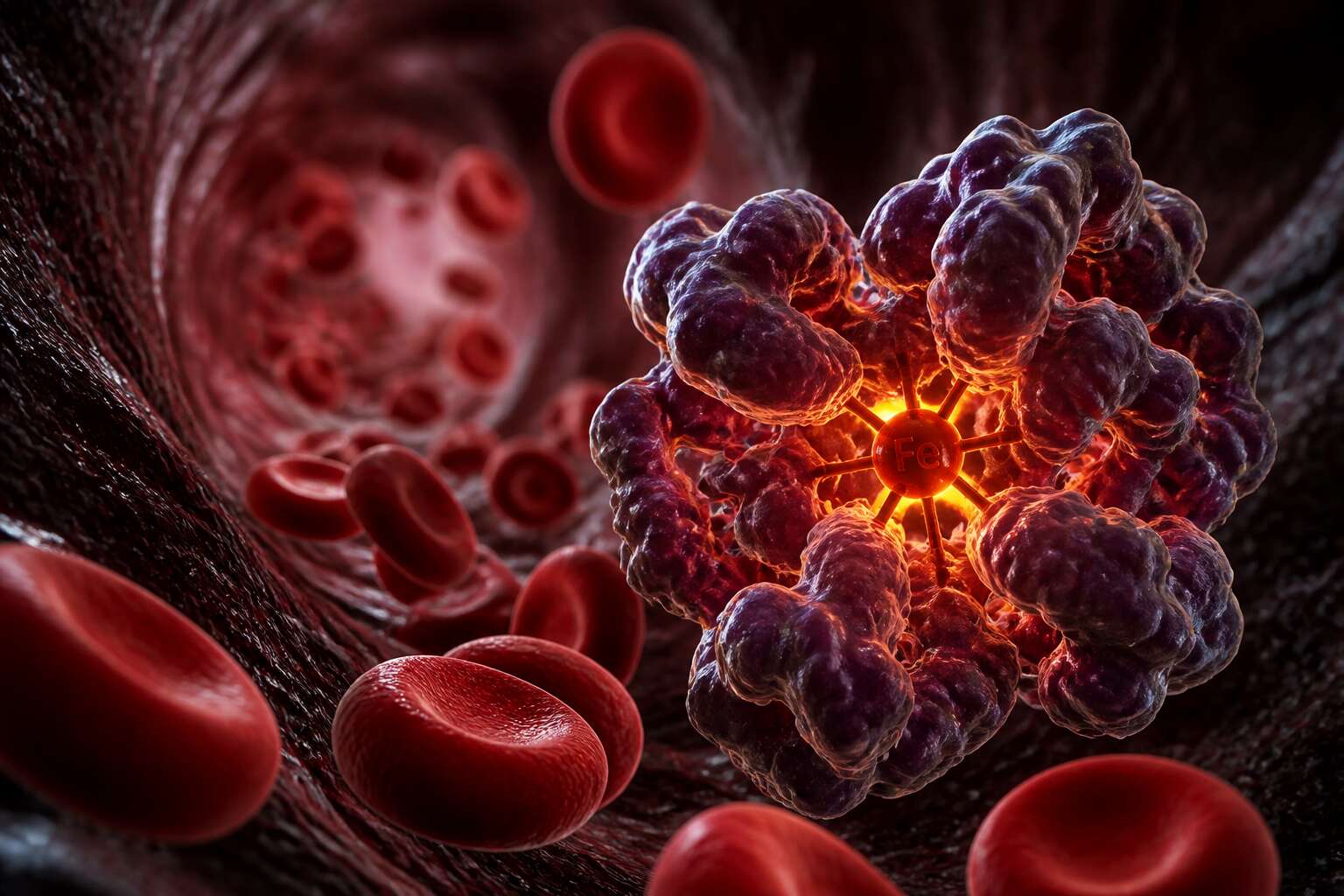
The Science of Blood Coloration
Roughly 25 trillion red blood cells course through your veins, each one packed with the same pigment. So what pigment makes blood red? It is heme, an iron-containing molecule nestled inside each hemoglobin protein. When iron binds oxygen, it shifts the molecule’s electron configuration, absorbing green light and reflecting red back to your eyes.
I find this chemistry profound. Iron, the same element that forms rust, gives your veins their scarlet color. Without this precise molecular arrangement, human blood would look entirely different.
Consider what heme actually does:
- Transports oxygen from lungs to tissues
- Carries carbon dioxide back for exhalation
- Gives arterial blood its bright, oxygenated redness
Venous blood appears darker because deoxygenated heme reflects less light. Understanding what pigment makes blood red helps explain this shift. The answer is heme, not iron alone. That distinction matters!
Meet Hemoglobin: The Iron-Containing Protein
Your body holds about four grams of iron, almost all of it tucked inside hemoglobin. That protein is the answer to what pigment makes blood red. Hemoglobin sits in red blood cells and carries oxygen from your lungs to every tissue. It also hauls carbon dioxide back for exhalation. I’m still amazed that such a small molecule drives your entire energy system.
The color comes from a molecular structure called heme. A single iron atom sits at the center of each heme group. When oxygen binds to that iron, the molecule shifts and light reflects differently. That is why arterial blood is bright scarlet and venous blood is darker. Hemoglobin does more than transport gases:
- It buffers blood pH by picking up hydrogen ions.
- It gives red blood cells their flexible shape to squeeze through capillaries.
- It binds nitric oxide, which helps regulate blood pressure.
The Primary Pigment: Heme
It happens with every cut, with every breath. I have watched the deep, rich color of life spill onto the soil after a long day of work, a stark reminder of our fragility. The answer to what pigment makes blood red is not merely a fact; it is a story written in iron. The primary agent is hemoglobin, but the star of the show is a molecular structure known as heme. This is the pigment that holds the secret to our vitality.
Within the heme molecule sits a single atom of iron. This atom binds to oxygen, and it is this specific chemical union that creates that brilliant red hue. When oxygen is present, the molecule reflects light in a way that produces the bright scarlet of arterial blood. Without oxygen, the structure shifts, and the blood takes on a darker, more muted burgundy tone. It is a quiet but profound transformation.
For those who work the land, this visual cue is something you learn to read without thinking. A healthy animal has a certain color to its blood, a sign of proper oxygenation and strong circulation. There are several factors that alter this perception:
– The presence of carbon monoxide, which binds tighter than oxygen, can lock the blood into a persistent cherry red.
– Certain medical conditions can change the molecular charge, leading to a brownish tint.
– The thickness of the tissue can influence how deeply you perceive the color.
It is an astonishing fact that our bodies harness this simple metal to perform such a critical task. The iron that rusts in the farm gate is the same element that carries life through our veins. The next time you see that red, you know it is the heme working, a humble molecule doing a spectacular job.
Blood Color Variations in the Animal Kingdom
Every vertebrate on Earth owes its crimson tide to hemoglobin, the iron rich protein that answers what pigment makes blood red. But nature refuses to follow a single blueprint. Venture beyond the vertebrates, and blood becomes a kaleidoscope of biochemical invention.
Consider the horseshoe crab. Its blood runs pale blue, colored by hemocyanin, a copper based pigment. The sea cucumber bleeds yellow thanks to vanabin. Brushtooth brachiopods rely on hemerythrin for violet blood instead. This is what pigment makes blood red in most animals, yet the exceptions reveal a more peculiar truth.
– Horseshoe crab: blue
– Sea cucumber: yellow
– Brushtooth brachiopod: purple
– Earthworms: red
The difference is survival strategy. Hemoglobin binds iron and oxygen with remarkable efficiency, but copper based hemocyanin performs better in cold, oxygen poor water. Evolution shapes blood chemistry to fit the environment. Red is iconic, sure. It is also merely one chapter in a much stranger story.
Common Myths About Blood Color
Nearly 45% of South Africans think vein blood runs blue under the skin. This myth persists because light scatters through tissue, making surface vessels appear cyan. Yet every drop of human blood owes its crimson tone to hemoglobin, the iron rich protein that answers what pigment makes blood red.
In a dusty Limpopo clinic, I watched a nurse draw blood. A patient asked if her dark blood meant sickness. The nurse smiled. Deoxygenated blood looks deeper, but it never turns blue. The confusion comes from medical diagrams, not reality.
- Myth: Insects have red blood. Fact: Their hemolymph is clear.
- Myth: Blood turns black when exposed to air. Fact: It dries crimson, then brown.
These tales gain traction because we trust old wives’ stories over our own eyes. But the science stays plain. Hemoglobin’s heme group binds iron, and that iron reflects red wavelengths. Simple. Beautiful. That is the truth!




0 Comments