The Primary Pigment in Beetroot
Defining Betalains and Their Biological Role
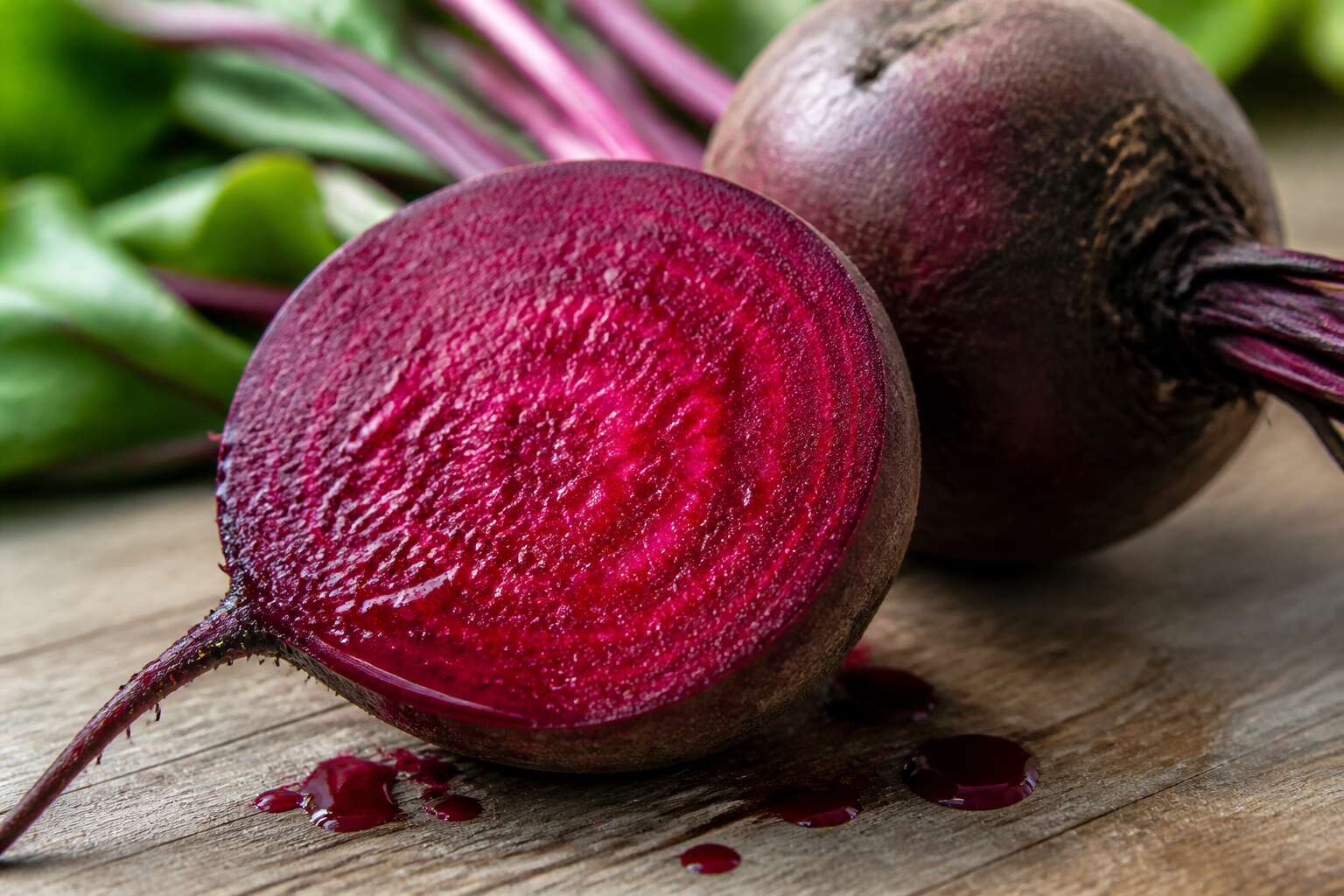
Ask anyone what pigment is in beetroot and you will hear the correct answer: betalains. These nitrogenous compounds are the source of the root’s crimson. The primary pigment, betanin, belongs to the betacyanin family and thrives where other pigments would degrade. That resilience points to its biological role.
Inside plant cells, betalains scavenge free radicals and protect tissue from oxidative stress, particularly in harsh, saline environments. This function is not merely cosmetic; it is a living defence system. Betanin also contributes to osmoregulation, helping the root adjust to water fluctuations.
- Betanin dominates the red-violet spectrum.
- Betaxanthins yield yellow undertones.
- Together, they define the beet’s hue.
I find it remarkable that the molecule which stains your hands purple also supports cellular balance! So when you ask what pigment is in beetroot, remember that the answer is more than a colour.
Betanin: The Dominant Red Pigment
Ask what pigment is in beetroot and the answer narrows to betanin. This single molecule provides up to 90 percent of the root’s crimson intensity. Chemically, betanin is a glycoside. A glucose unit attaches to its core structure, making the pigment readily soluble in water.
Heat disrupts betanin quickly. A long boil strips the colour, leaving a dull brown. It persists in mildly acidic conditions, which is why pickled beets hold their hue. Light causes similar damage; direct sun fades the pigment within days. I find that fragility surprising for such a vivid colour.
- Betanin is listed as additive E162.
- It colours yoghurt, sweets, and cold drinks.
- It appears in many berry-flavoured products sold in South Africa.
When a label claims natural colour, betanin is often the source. That is the honest answer to what pigment is in beetroot, and it explains why manufacturers handle it with care.
How Betalains Differ from Anthocyanins
To answer what pigment is in beetroot, the primary agent is betalain, a pigment family entirely distinct from anthocyanins. Anthocyanins are flavonoids present in berries and flowers, generating their red to blue hues. Betalains are nitrogenous compounds produced via a separate biochemical pathway. These two types never occur together in the same plant, so beetroot serves as a dedicated betalain source.
Anthocyanins react to pH changes, shifting toward blue in alkaline conditions. Betalains resist such shifts, holding a steady red under mild acidity. That property explains why pickled beets retain their colour, and why manufacturers use beetroot extracts in yoghurts and cold drinks. I find this chemical stability genuinely remarkable for a pigment so vivid!
The Chemical Structure of Betanin
Ask what pigment is in beetroot and you get an answer more precise than “red”. The primary pigment is betanin, a glycoside composed of betanidin linked to glucose. That sugar moiety changes how the molecule behaves. Betanin absorbs light around 535 nanometres, which gives the vegetable its signature magenta crimson.
Betanin’s structure explains its resilience. The molecule consists of three interconnected parts:
- betalamic acid, the chromophore responsible for colour
- cyclo-DOPA, which contributes to stability
- glucose, the sugar that aids solubility
This arrangement supports electron delocalisation. I have always found it elegant how a simple bond configuration produces such intense colour!
How Betalains Produce Beetroot’s Distinct Color
The Role of pH in Shifting Color Hues
Few kitchen spectacles rival the moment a beetroot surrenders its color to boiling water. The answer to what pigment is in beetroot lies in betalains, specifically betanin, which absorbs green light and reflects the crimson we associate with this root vegetable. The molecule’s conjugated double bonds act as a light trap, and the color shifts with the chemistry around it.
pH alters betanin’s appearance considerably. In acidic conditions, the pigment remains steadfast, delivering that deep red typical of pickled beets, a staple in many South African pantries. Under alkaline conditions, the molecule changes shape, nudging the color toward purple or blue. This explains why adding baking soda to beetroot water produces an unexpected transformation, one that cooks have noticed for generations.
Here is how the color behaves across conditions:
1. Strongly acidic: bright red, stable pigment
2. Neutral: red-violet, slightly muted
3. Alkaline: purple to blue, pigment begins breaking down
The visible lesson is that what pigment is in beetroot only tells half the story. The environment does the rest.
Betacyanins vs. Betaxanthins: Red and Yellow Families
More than 50 betalain pigments exist in nature, yet a single beetroot shows two distinct groups in action. What pigment is in beetroot comes down to red betacyanins and yellow betaxanthins. Both trace back to betalamic acid, a molecule the plant assembles from tyrosine. From that shared starting point, the compounds branch apart.
Betacyanins, led by betanin, provide the crimson colour of the root. Betaxanthins, such as vulgaxanthin, linger near the skin and crown, their yellow presence muted by the volume of red. In my kitchen, I only catch that yellow when I slice a beet thin enough to hold against the light. The root depends on the first family, which is why the flesh looks red from peel to core.
In brief:
- Betacyanins: red to violet, high concentration, define the main colour
- Betaxanthins: yellow to orange, low concentration, visible only in thin sections
Impact of Cooking and Heat on Betalain Stability
Ask what pigment is in beetroot and you might picture a simple red stain on your fingers. Heat changes that story. Boil a beet and the water turns deep crimson! That colour loss is not the pigment vanishing. Heat breaks the cell walls that hold betanin in place. The molecule tolerates temperatures up to roughly 60 degrees Celsius. Beyond that, degradation accelerates.
Roasting behaves differently from boiling. Dry heat concentrates the juices instead of washing them out. Steaming sits somewhere in between. Betalain stability depends on several conditions:
- Temperature, since prolonged heat destroys the chromophore
- Water exposure, which leaches pigment from the flesh
- Oxygen, which oxidises the molecule and dulls the colour
Knowing what pigment is in beetroot matters because it changes how you cook. In my kitchen, roasting beets whole with the skins left on holds the red far better than boiling does. The pigment simply survives longer without water and harsh heat.
Why Beetroot Fades, Browns, or Loses Color
What pigment is in beetroot? The answer lies in molecular architecture. Betalains generate colour by absorbing selected wavelengths of light through a chromophore of alternating double bonds. Betalamic acid anchors the molecule, and electrons moving across that structure decide which tones reach the eye. While those bonds hold, beetroot keeps its signature magenta depth.
That depth is fragile. Fading and browning arise when enzymes in damaged flesh dismantle the chromophore, when strong light breaks the double bonds, and when oxidation turns red betacyanins into pale debris. A cut beetroot can dull within minutes. In my kitchen, sliced beets lose their colour before the dressing is ready.
The pace depends on circumstances:
- Exposed cut surfaces hasten oxygen damage
- Bright kitchens accelerate light degradation
- Waiting time amplifies enzyme attacks
These same circumstances dictate how long what pigment is in beetroot stays visible after preparation.
Light and Oxygen Exposure Effects on Beetroot Pigment
Light and oxygen determine what remains visible. When you ask what pigment is in beetroot, the answer begins with betalains, but the visible result depends on the conditions those molecules face. Sunlight drives photodegradation, breaking the double bonds that allow the chromophore to absorb green and violet wavelengths. Oxygen oxidises betanin into compounds that reflect less light.
The order of destruction follows a predictable pattern:
- Surface oxidation dulls the red within minutes
- UV exposure accelerates chromophore fragmentation
- Combined light and oxygen reduce pigment concentration steadily
South African summers make this noticeable on a braai platter or in a salad bowl left outdoors. I have watched vibrant beetroot turn amber within an hour of serving. The same beetroot shows a different shade depending on whether it sits in sun or shade, wrapped or uncovered. That is the practical reality of what pigment is in beetroot.
Nutritional and Health Properties of Betalain Pigments
Antioxidant Capabilities of Betanin
Few consumers pause to consider what pigment is in beetroot, yet the answer shapes more than the plate’s colour. Betalains, the compounds responsible, serve a nutritional role beyond aesthetics. Betanin, the red member of this pigment family, demonstrates significant antioxidant capabilities. It scavenges free radicals and supports cellular defences without synthetic additives.
Research on betalain pigments points to their influence on inflammatory pathways. Several studies suggest they may ease oxidative stress in tissues. For South African readers who add beetroot to their diet, knowing what pigment is in beetroot clarifies why these compounds matter. A typical serving delivers:
- Betanin, which protects cell membranes
- Betacyanins, which support liver function
- Betaxanthins, which offer nutritional support
The antioxidant capabilities of betanin remain an active area of study. The food source itself provides a practical way to obtain these molecules.
Anti-Inflammatory Benefits Linked to Betalains
When we ask what pigment is in beetroot, the answer carries nutritional weight beyond the kitchen. Betalains have shown promise in modulating inflammatory responses in human cells. I have seen how a diet rich in these pigments can ease joint discomfort over time, though research is still unfolding.
Nutritional studies highlight several health properties of betalain pigments. These molecules may influence inflammatory markers like cytokines. For South Africans, adding roasted beetroot to a meal offers a simple way to support wellness.
- Betanin supports healthy blood pressure regulation
- Betacyanins assist cellular repair mechanisms
- Betaxanthins contribute to metabolic balance
Understanding what pigment is in beetroot helps consumers make informed choices. The anti-inflammatory benefits linked to betalains are gaining attention in clinical nutrition circles. More research will clarify their full role.
Bioavailability and How the Body Absorbs Betalains
The real question when we ask what pigment is in beetroot is whether the body can actually use it. Betalains are water soluble compounds that survive stomach acid reasonably well. Absorption happens mainly in the small intestine. Yet the body does not process every betalain the same way. Betanin shows moderate absorption, while betaxanthins appear to enter circulation more readily.
Several factors shape how much pigment reaches the bloodstream:
- The food matrix and fibre content around the beetroot
- Cooking methods that soften plant cell walls
- Individual digestive enzyme activity
Once absorbed, betalains bind to plasma proteins for transport through the body. Human trials show betanin appears in urine within two to four hours after eating. This rapid clearance is significant. Understanding what pigment is in beetroot helps explain why steady dietary exposure matters more than occasional large portions.
Potential Detoxification Effects of Beetroot Pigment
What pigment is in beetroot determines more than visual appeal. Betalains activate phase II detoxification enzymes in the liver, a pathway that transforms lipid soluble toxins into water soluble compounds for elimination. This nutritional property often goes unnoticed. Betanin supports these enzymes directly, while betaxanthins contribute to cellular glutathione balance. The result is a pigment system that functions as a metabolic aid.
Detoxification effects depend on regular exposure. The liver demands consistent support. A weekly serving of beetroot is insufficient. Daily inclusion, even in small amounts, sustains enzyme activity. Other nutritional properties include:
- Folate and manganese content
- Dietary nitrates that support circulation
- Fibre for bile binding
This list offers a fuller picture of beetroot’s value beyond pigment chemistry.
Industrial and Culinary Applications of Beetroot Pigment
Beetroot Extract as a Natural Food Dye (E-162)
Every jar of ruby-coloured jam or bottle of vivid cordial owes its appeal to a chemical answer. The question of what pigment is in beetroot has transformed food chemistry, because betanin, marketed as E-162, delivers a natural red that rivals synthetic alternatives. South African manufacturers rely on this extract for berry-flavoured yoghurts, surviving pasteurisation with moderate colour loss.
In my view, culinary traditions also embrace the pigment. Artisanal bakers fold beetroot extract into frostings, while charcuterie producers use it to restore colour after curing. What a versatile addition!
Key applications of E-162 in industry:
- Dairy products including flavoured milk and cream cheese
- Fruit preparations for bakery fillings
- Alcoholic and non-alcoholic beverages
- Dry mixes such as jelly powders and dessert bases
The extract’s hydrophilic nature allows direct dispersion in aqueous systems, yet careful pH adjustment remains essential. For clean-label formulators, understanding what pigment is in beetroot unlocks a reliable colour source.
Stability Challenges in Food Processing and Storage
The pigment in beetroot, betanin, is a master of survival yet a victim of circumstance. In industrial settings, pasteurisation at high temperatures strips away a noticeable fraction of its red brilliance. Culinary applications face similar pressure, as oxidation and pH shifts quietly degrade the colour. I have watched a vibrant beetroot glaze turn dull within hours when left uncovered. Processors must control several variables to keep the magic alive:
- Heat exposure during sterilisation, which accelerates pigment breakdown
- Light contact in transparent packaging, triggering photodegradation
- Metal ions from equipment, which catalyse unwanted reactions
Understanding what pigment is in beetroot means respecting these limits. A clever formulator adjusts the matrix, uses chelating agents, and minimises processing time. The result? A stable red that persists beautifully.
Modern Extraction and Purification Methods
Modern extraction has transformed how we harness the pigment in beetroot. Supercritical carbon dioxide and enzymatic assistance now isolate betanin with remarkable purity. These methods protect the fragile chromophore from heat and oxygen, yielding concentrates that retain their crimson intensity.
- Pressurized liquid extraction
- Membrane filtration for concentration
- Spray drying into stable powders
In culinary spaces, chefs use purified extracts for precise colouring without earthy flavours. Industrial formulators blend these pigments into dairy, confectionery, and beverages. The answer to what pigment is in beetroot drives this entire supply chain. Each batch demands rigorous testing for colour strength and stability. I find the shift from whole root to pure pigment a fascinating evolution in food science.
Comparing Beetroot Pigment with Other Natural Colorants
In industrial kitchens, the answer to what pigment is in beetroot shapes every tinted jar, every frosted cake. Betanin, the dominant compound, slips into batters and emulsions where heat would destroy lesser dyes. I have watched pastry chefs swirl this crimson into macarons with surgical precision, knowing the colour will not betray them.
Comparing it with other natural colorants reveals a stark hierarchy. Consider the rivals:
- Grape anthocyanins shift to blue under alkaline conditions.
- Cochineal persists but demands costly insect harvesting.
- Paprika oleoresin lends orange, never true red.
Betanin endures where others falter. What pigment is in beetroot drives purchasing decisions, shelf stability tests, and entire product lines. The pigment in beetroot does more than colour food; it anchors the industry.
Innovative Uses of Betalains in Cosmetics and Textiles
In cosmetology, the same pigment that deepens a beetroot’s flesh now tints lipsticks and blushes in Johannesburg laboratories. What pigment is in beetroot matters to formulators because betalains deliver a water soluble red that replaces synthetic dyes without the ethical questions. Textile workshops in the Western Cape have begun soaking cotton and linen in beetroot extract, though mordants remain essential to keep the colour from running in the wash.
Chefs use the pigment in unexpected places:
- Cold pressed dressings that hold a sharp magenta tone.
- Ice cream bases where the colour stays true at low temperatures.
- Plant based meat alternatives that need a natural bleeding effect.
Each application demands a different extraction purity level, and suppliers now tailor batches for specific pH ranges and required shelf lives.
Frequently Asked Questions About Beetroot’s Pigment
Why Does Beetroot Stain Skin and Clothing So Easily?
Why does beetroot stain skin and clothing so easily? The answer starts with what pigment is in beetroot. Betanin, a water-soluble betalain, dissolves readily into moisture. Once wet, it seeps into fabric fibers or the outer layer of your skin, where the chromophore holds stable until enough heat or time breaks it apart.
Cold water alone rarely lifts these marks. The pigment’s affinity for cellulose makes cotton especially vulnerable.
- Pre-treat stains with hot water and a gentle acid like lemon juice.
- Wear an apron when peeling or slicing fresh beets to avoid the worst.
That same persistence explains why a splash of beetroot juice can feel impossible to remove!
Can Beetroot Be Yellow or White and Still Contain Betalains?
Yellow beetroot answers a common question about what pigment is in beetroot: not all betalains are red. Golden varieties rely on betaxanthins, the yellow family of these same pigments. They offer a comparable antioxidant profile to red beets, though the chromophore absorbs light differently. The shift in colour does not change the pigment family, which surprises many people!
White beetroot is another matter. Varieties like White Albino lack visible pigment almost entirely. They still produce trace amounts of betalains, but not enough to colour the flesh. In my kitchen, white beets give the earthy flavour without the stain, while yellow beets carry the full pigment load.
- Golden beets contain betaxanthins, not betanin.
- White beets show negligible betalain levels in most harvests.
- Both belong to the same species, Beta vulgaris.
Which Other Plants Naturally Produce Betalains?
Beetroot is not the only plant carrying these pigments. The question of what pigment is in beetroot applies to a wider botanical family. Betalains appear in the order Caryophyllales, which includes amaranth leaves, known as morogo in South Africa, along with quinoa stems and the flesh of dragon fruit. Prickly pear cactus, Swiss chard, and bougainvillea bracts also produce betalains.
The list reads like a market aisle:
- Amaranth synthesises red betacyanins in its leaves and seeds.
- Dragon fruit stores betalains in its magenta pulp.
- Purslane and portulaca carry yellow and orange betaxanthins.
- Opuntia prickly pears, common across the Karoo, rely on the same pigment chemistry.
These plants use betalains as protection against UV radiation and oxidative stress. That explains why the pigments concentrate in exposed tissues like bracts and skins. So when you ask what pigment is in beetroot, the answer extends beyond the root itself.
Does Cooking or Boiling Destroy the Red Pigment?
Does boiling destroy the red pigment? Only if you think giving it a swimming pool counts as destruction. Betanin, the answer to what pigment is in beetroot, dissolves eagerly in water. The red you see in the cooking liquid is the pigment abandoning the root. So the root fades, but the pigment still exists, just elsewhere.
Heat does degrade betalains over time. Leave a beet boiling for two hours and your dinner will be greyish brown. A quick simmer or a roast preserves far more color. Steaming works even better, since there is no water to escape into. The pigment survives, but it needs a little respect.
Why Does Beetroot Turn Brown When Exposed to Air?
Why does a fresh slice of beetroot start to look tired and brown within minutes? The culprit is oxygen, but the real work is done by enzymes. When you cut into the root, you rupture cells and release polyphenol oxidase. This enzyme reacts with oxygen and attacks betanin, the compound answering what pigment is in beetroot. The oxidation turns the red into brown breakdown products. That brown is not spoilage; it is oxidation.
- Fresh, uncooked beets have the highest enzyme activity.
- Boiling or roasting deactivates the enzyme, so cooked beetroot stays red longer.
- Acidic dressings, such as lemon juice or vinegar, slow the reaction.
So what pigment is in beetroot? Betanin! And betanin is reactive. It does not sit still. Oxygen changes it quickly. Once the blade meets the flesh, the clock starts ticking.



0 Comments