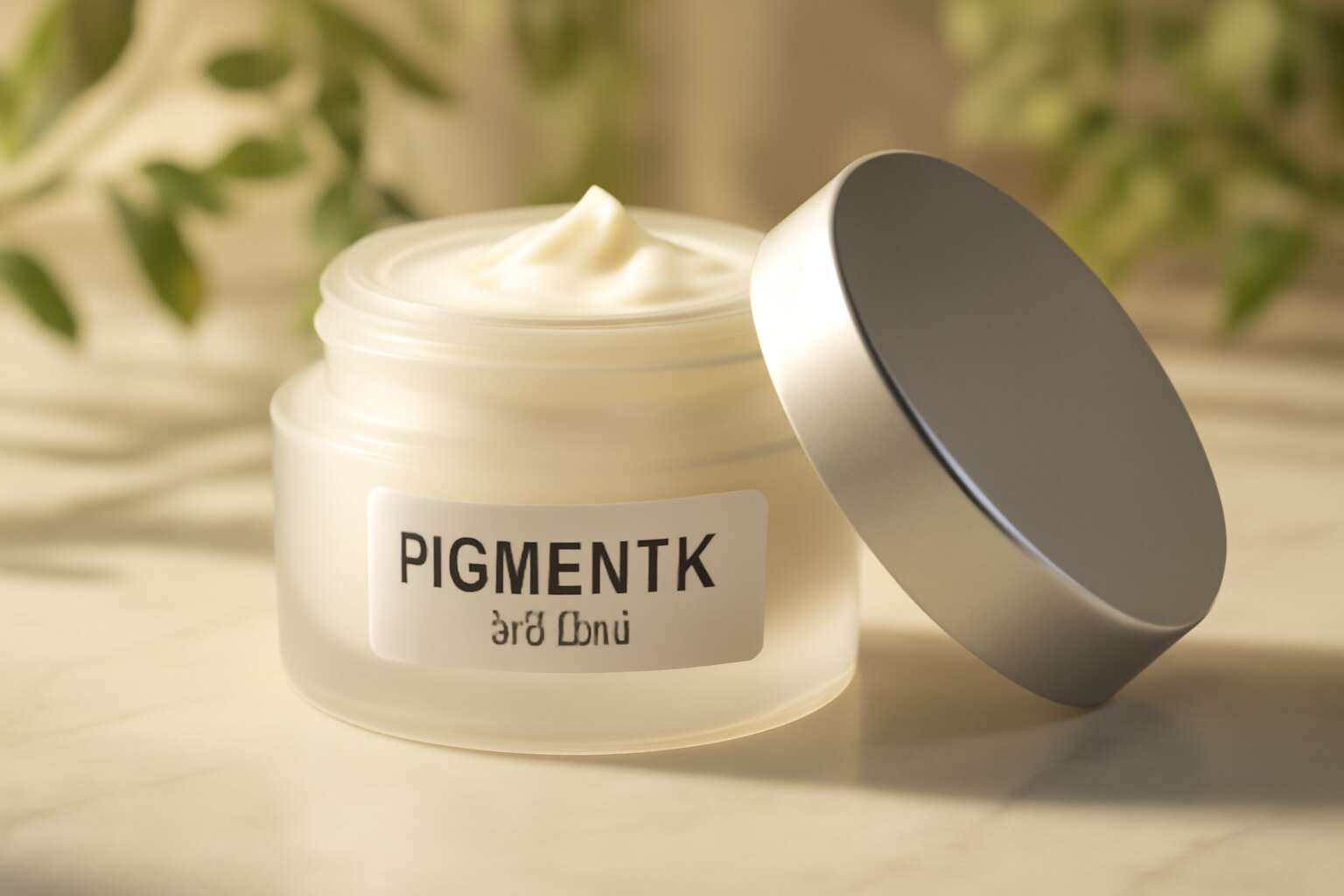
Understanding pigment technology in skincare
What is a pigment related skincare cream
In the realm of skin, light carries secrets. Understanding pigment technology reveals how pigment k cream sits at the crossroads of color and care. Pigments—mineral oxides or carefully milled synthetics—act as colorants that help even out uneven tone while providing a soft, skin-like veil.
What is a pigment related skincare cream? It is a formulation that blends color pigments with a soothing base, designed to glaze the surface with a natural-looking tint, while harboring light-diffusing particles that minimize the appearance of dark spots and blotchiness. For pigment k cream, the art lies in dispersion, particle size, and stable binders to keep color true across the day.
For South African skin, climate matters; this niche requires thoughtful balance of pigment, SPF, and skin-friendly actives.
- Dispersion and particle size
- Dermatologically tested pigments
- SPF and UV stabilization
What makes a pigment cream effective
One in three adults globally wrestles with uneven pigmentation, a refrain that maps the skin’s light and shade. Understanding pigment technology reveals how pigment k cream sits at the crossroads of color and care. The craft rests in dispersion, pigment sizing, and stable binders that keep color true as daylight travels.
- Dispersion and particle size
- Dermatologically tested pigments
- SPF and UV stabilization
Three craft pillars define its character:
When these elements align, the texture glows with a natural tint while diffusing light to soften uneven texture.
In South Africa’s radiant climate, pigment k cream must balance pigment with SPF and skin-friendly actives. The aim is a skin-brightening veil that feels breathable under fierce sun while inviting a confident, natural glow.
Common uses and benefits of pigment based creams
Across the globe, one in three adults wrestle with uneven pigmentation, a quiet map of light and shade etched on the skin. In South Africa’s radiant climate, pigment k cream becomes a compass, balancing color with care as the sun holds court over every day.
Understanding pigment technology reveals how pigment k cream sits at the crossroads of tone and texture. A formula thrives when color particles disperse evenly, match their size, and ride on stable binders that keep shade true under daylight.
Three craft pillars define its character:
- Seamless blending through precise dispersion and pigment sizing
- Dermatologically tested pigments that honor sensitive skin
- SPF-ready formulations that stabilize color in bright daylight
When these elements align, the texture glows with a natural tint while diffusing light to soften uneven surfaces, a breathable veil under Africa’s sun.
Who should consider pigment skincare
A third of adults wrestle with uneven pigmentation, a quiet map of light across the skin. In South Africa’s sunlit towns, pigment becomes a compass. Understanding pigment technology reveals how color particles disperse evenly, match their size, and ride stable binders that keep shade true under daylight. When this harmony holds, pigment k cream reveals a natural tint and a breathable veil—one I watch settle with a quiet exhale!
Who should consider pigment skincare? Those seeking tone and texture balance under the glare of the South African sun:
- Individuals with uneven pigmentation seeking a harmonized complexion
- Sun-exposed or sensitive skin in varied climates
- Dermal professionals aiming for stable shade under daylight
How pigment-based creams work
Mechanism of action for pigment targeting creams
In a sun-drenched landscape where one in three South Africans confront uneven skin tone at some stage, pigment k cream becomes a guiding lantern through the dusk of complexion concerns!
At its core, this formula works by modestly curbing melanin production and steering pigment toward an even, sunset-like finish. It targets the enzyme tyrosinase, easing the pigment path without stripping the skin’s natural glow, while supporting cellular turnover so new, clarified cells rise to the surface.
- Tyrosinase inhibition reduces new pigment formation.
- Gentle exfoliation accelerates pigment shedding for a more uniform tone.
- Antioxidant support guards skin against environmental triggers that provoke uneven pigment.
Weaving science with wonder, this blend invites your skin to respond with clarity and character, revealing a tone that feels as timeless as a legend.
Role of key actives in pigment-based creams
Across South Africa, uneven skin tone affects countless faces under bright sun and urban lights. How pigment-based creams work is a quiet negotiation between production and renewal. pigment k cream slows new pigment formation while encouraging newer, lighter cells to rise to the surface. It nudges the skin toward a more even, sunset-like tone without dulling its natural glow.
Key actives in pigment-based creams perform distinct yet complementary roles. With pigment k cream, these actives work together to guide pigment toward an even finish.
- Glycolic acid and related AHAs gently lift dull pigment clusters.
- Vitamin C offers antioxidant protection and brightens the complexion.
- Licorice extract (glabridin) helps inhibit pigment transfer and supports an even tone.
- Niacinamide supports barrier function and can reduce uneven pigment.
How it interacts with skin types and tones
Nearly 80% of South Africans notice uneven tone under sunlit sidewalks and neon nights. Pigment-based creams perform a quiet negotiation between renewal and restraint. pigment k cream slows pigment formation and nudges fresher, lighter cells toward the surface, guiding the complexion toward a more even, sunset-like glow while keeping the skin’s natural radiance intact.
These formulas interact with diverse skin types and tones by balancing turnover with nourishment, so the finish respects your natural hue rather than erasing it. The result is a product that adapts to daily sun exposure and urban lighting, delivering steadier tone without drama.
- Fair skin tones may see subtle brightening with gentle exfoliation.
- Medium and olive tones often experience more uniformity without heaviness.
- Sensitive or dry skin benefits from hydration and barrier-supporting ingredients.
Navigating the SA climate, you’ll notice a complexion that stays even as the lights shift and the days heat up.
Expected timelines and results
Urban South Africa offers a harsh light diet: UV by day, neon by night. Nearly 80% of South Africans notice uneven tone under sunlit sidewalks and neon nights. pigment k cream slows pigment formation and nudges fresher, lighter cells toward the surface, guiding the complexion toward a more even glow while keeping the skin’s natural radiance intact!
- Within 2 to 4 weeks: subtle brightening and a calmer baseline across the complexion.
- By 6 to 8 weeks: more uniformity without heaviness, preserving the skin’s natural texture.
- Around 12 weeks: steadier tone that remains balanced as sun and urban lighting shift.
The finish respects the natural hue, delivering steadier tone without drama, adapting to daily light and urban glow rather than erasing individuality.
Each complexion carries its own memory of light, and this formula reads that memory with care. It translates light into balance—subtle, patient, enduring.
Ingredients and formulations
Core ingredients powering pigment-based creams
In pigment-focused skincare, the heart of every blend is a careful choreography of actives. The pigment k cream channels balance, brightness, and barrier support into a single luminous formulation designed for South Africa’s diverse tones. A whisper of glow, a quiet resilience—beauty that endures without drama.
Core ingredients powering pigment-based creams include:
- Vitamin C derivatives (such as tetrahexyldecyl ascorbate) for brightening and stability.
- Niacinamide (Vitamin B3) to support barrier health and even tone.
- Azelaic acid or tranexamic acid for targeted pigment control and gentle exfoliation.
- Licorice root extract and kojic acid as natural lighteners with soothing properties.
Formulation science marries these actives with stable emulsions, pH-balanced bases, and skin-conditioning oils to deliver consistent dispersion across layers of the skin. The artistry lies in balancing potency with comfort, ensuring pigment k cream reads as a glow rather than a glare.
Active vs inactive components and their functions
In a country where skin tones span a rainbow, 70% of skincare users in SA seek formulas that brighten without irritation. In the fabric of pigment k cream, ingredients perform a careful duet. Active components drive brightening, even tone, and a fortified barrier, while inert carriers and texture modifiers ensure comfort and stability. The result is a glow that reads as confident and natural, tailored to South Africa’s diverse tones.
- Active components deliver targeted actions—brightening, even tone, and pigment regulation.
- Inactive components stabilize the formula, optimize texture, and soothe the skin under heat and humidity.
- Delivery systems and bases maximize even dispersion across skin layers while maintaining a comfortable pH.
Balance and intention steer the formulation philosophy, turning science into skin that looks luminous in the morning and resilient by night.
Allergen and safety considerations
Across South Africa’s diverse skin, 70% of skincare users seek brightening without irritation. In pigment k cream, ingredients perform a quiet, moonlit duet, balancing luminosity with restraint, a glow that holds through warm days!
Ingredients and formulations are chosen to minimize flare while preserving efficacy. Allergen safety lives in INCI labeling—fragrance components, certain preservatives, and botanical extracts may irritate sensitive souls.
- Fragrance allergens such as limonene, linalool, and eugenol
- Preservatives including phenoxyethanol and certain parabens
- Botanical extracts and essential oils that can irritate sensitive skin
Safety and stability walk hand in hand, even under heat and humidity that SA skin endures, guarding the night as it brightens the day.
Plant-based and dermatologically tested options
In pigment k cream, ingredients are chosen with a quiet respect for South Africa’s diverse skin and climate. Plant-based options are prioritized, paired with dermatologically tested protocols to minimize irritation while preserving luminosity. The result is a formulation that respects sensitivity without sacrificing efficacy—a balance many skincare users crave.
Plant-based and dermatologically tested options include:
- Botanical extracts backed by clinical testing aimed at gentle brightening
- Non-irritating emollients that support the skin barrier
- Fragrance-free or low-allergen components for sensitive souls
Stability under heat and humidity is part of the design, ensuring the glow endures through SA summers. This approach lets the product hold steady while the day warms, a quiet beacon in a crowded skincare routine.
Vegan and cruelty-free indicators
‘Glow is a conversation between science and gentleness,’ as a South African dermatologist might say. I see pigment k cream deliver gentle brightness in real SA mornings. It follows that ethos with a plant-forward matrix designed for our climate. The formula leans on plant-based actives, backed by dermatological testing, to brighten while minimising irritation. It’s the kind of care that respects sensitive skin without dulling the glow.
Vegan and cruelty-free indicators guide every stage of the formulation. The following pillars support that promise:
- Vegan-certified actives sourced from sustainable farms
- Cruelty-free testing protocols on all ingredients
- Fragrance-free or low-allergen components for sensitive skins
Designed to thrive in heat and humidity, the approach keeps the luminosity steady through SA summers. It’s a quiet, dependable option in a crowded routine—one that respects your skin and your values.
Usage, safety, and optimization
How to apply pigment-based creams for best results
“Skin reveals what you nurture daily,” a South African elder told me, and this cream can start that honest journey toward even tone. Steady, patient care beats quick fixes here.
Usage and safety with pigment k cream are simple: apply a thin layer to clean, dry skin at night; pair with SPF by day. Patch test first, and stop if irritation returns.
- Patch test 24–48h on a small area
- Apply a pea-sized amount to target zones
- Avoid eyes and mucous membranes
Optimization comes from consistency and skin awareness. Store the cream away from heat, use it with a moisturizer, and protect your routine with sun exposure control.
Patch testing and skin sensitivity
In South Africa, one in three skincare lovers seeks lasting even tone over a flashy fix. pigment k cream offers that measured path—a gentle, patient journey that respects your skin’s rhythm. Use a thin veil on clean, dry skin at night; by day, pair it with SPF. Steady care, not haste, keeps your complexion honest and resilient.
Patch testing and skin sensitivity are part of the ritual.
- Patch test 24–48h on a small area
- Apply a pea-sized amount to target zones
- Avoid eyes and mucous membranes
Optimization comes through consistency and awareness. Store the jar away from heat, use it with a moisturizer, and shield your routine with sun control. If redness, itch, or burning visits your skin, pause and revisit your regimen.
Combining with other skincare products
In a sun-splashed nation like South Africa, 72% of skincare lovers seek lasting even tone over a flashy fix. pigment k cream offers that measured path—a luminous, patient approach to skin tone that respects your complexion’s rhythm. We admire its quiet confidence and how it grows with you.
Safety remains the heartbeat of any brightening ritual. While pigment k cream is crafted for gentleness, sensitivities can arise. If redness or itching appears, pause and recalibrate how the product sits on your skin.
Optimization flows from consistency and thoughtful layering. When paired with the right products, the routine stays elegant and resilient:
- Moisturizers that support barrier function
- Broad-spectrum SPF for daytime protection
- Quiet serums with compatible actives, used as tolerated
Store away from heat, shield your routine from sun, and avoid overloading the skin. With steady, respectful use, pigment k cream harmonizes with your complexion’s natural cadence.
Storage, shelf life, and expiration
pigment k cream typically sits on clean, dry skin in a South African skincare routine. A small amount, warmed between fingertips, is gently patted onto the face, avoiding the eye area. Patch testing for 24 to 48 hours is a common precaution to gauge sensitivity.
Optimization with pigment k cream comes from a balanced routine. For harmony, consider these factors:
- Moisturizers that support barrier function
- Broad-spectrum SPF for daytime protection
- Quiet serums with compatible actives, used as tolerated
Safety remains essential! If redness or itching appears, pause use and reassess how the product sits on your skin.
Storage, shelf life, and expiration are straightforward: keep pigment k cream away from heat and direct sun, store with the cap sealed, and consult the packaging for the expiration date. Proper storage helps preserve stability and performance.
Who should avoid pigment-based creams
Usage: A pea-sized dab of pigment k cream, warmed between fingertips, is gently patted onto the face, avoiding the eye area. After cleansing, let hydration follow and layer a moisturiser as your skin invites.
Safety: If redness or itching appears, pause use and reassess. Let a calm routine guide the balance, and listen to your skin’s signals rather than rushing the moment.
Optimization: In a balanced South African routine, pair pigment k cream with moisturisers that support barrier function and broad-spectrum SPF for daytime protection, then introduce compatible actives gradually as tolerated.
Who should avoid pigment-based creams:
- Active dermatitis or eczema in the treated area
- Pregnant or breastfeeding individuals seeking guidance
- Known pigmentary disorders or photosensitivity




0 Comments