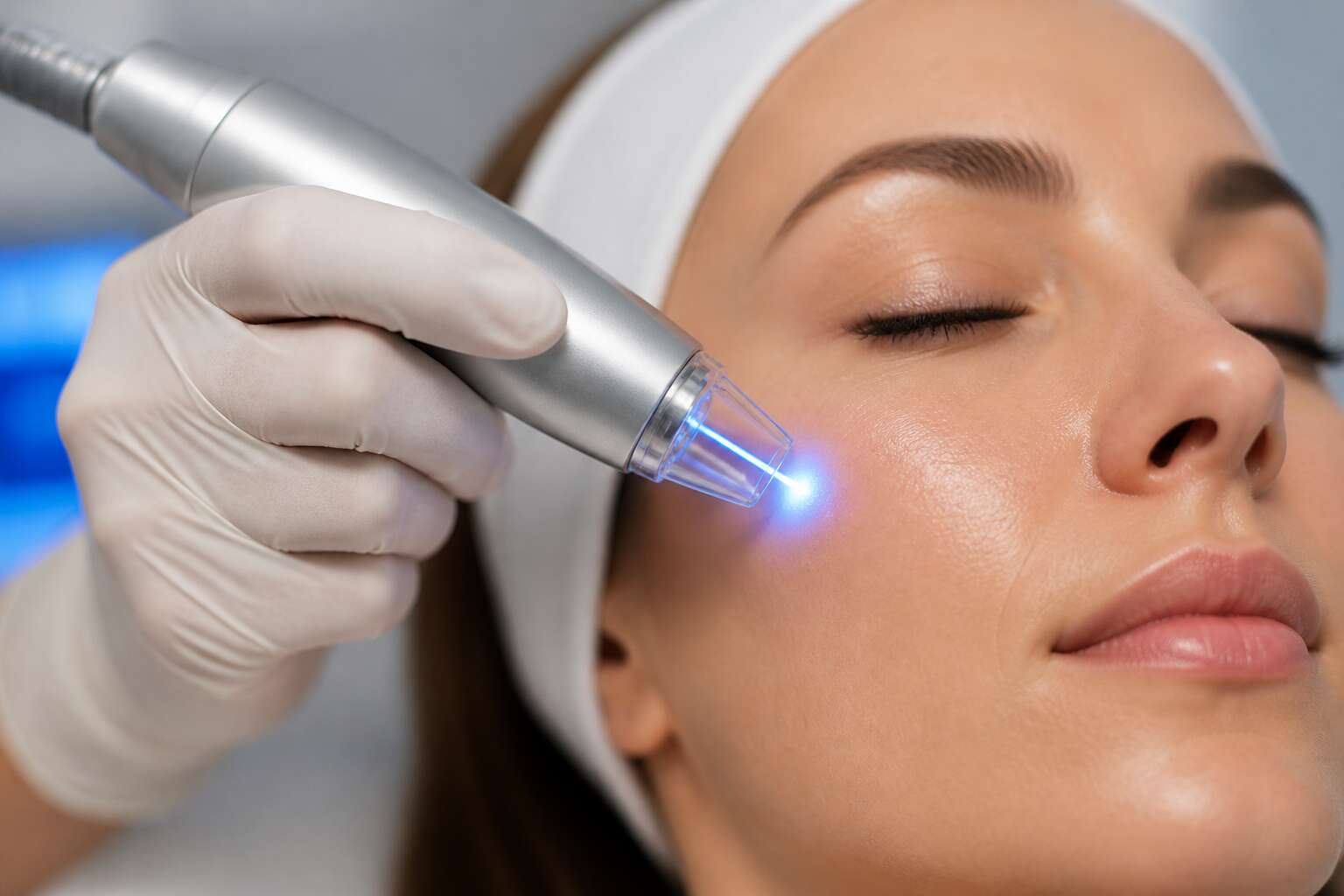
The Science of Skin Discoloration
Why Melanin Overproduction Leads to Dark Spots
The South African sun has a one track mind: it loves to paint your skin with souvenirs. When melanocytes go into overdrive, they produce excess melanin, creating dark patches called hyperpigmentation. It is not simple freckling; it is an overreaction that leaves stubborn shadows.
Melanin overproduction happens when your cells panic. UV exposure, hormonal shifts, or even a tiny pimple can trigger the alarm. The result? Clusters of pigment that settle in like uninvited guests.
These triggers often conspire:
- Sun damage without protection
- Hormonal fluctuations from pregnancy or medication
- Post inflammatory responses from acne or injuries
That is why dark spots persist. They are not surface stains; they are deeply embedded layers of excess colour. Knowing this helps you understand why a pigment laser targets specific cells, rather than scrubbing the surface. The science explains the stubbornness, and the treatment follows that logic.
Common Types of Hyperpigmentation
The palette of discolouration varies more than most realise. Each patch has a story written in melanin, but the depth of that story changes everything. Epidermal pigment stays near the surface, while dermal pigment sinks deeper, altering how light scatters. That distinction is not cosmetic; it changes treatment response.
- Melasma, which emerges from hormonal shifts and sun pressure.
- Post-inflammatory hyperpigmentation, a residue left by acne or injury.
- Solar lentigines, the slow etch of cumulative UV exposure.
Here is the twist! A pigment laser must read these signatures. Shallow spots accept quick energy, but deep pigment demands longer wavelengths. We often underestimate how much biology dictates the outcome. Spotting the difference transforms precision from theory into practice.
How Light and Skin Depth Affect Treatment
Light does not travel through skin in a straight line. It scatters, bends, and dissipates layer by layer. The depth of a pigment determines which wavelengths can even reach it. A pigment laser tuned for surface freckles will struggle against dermal melasma, where the melanin sits beyond reach.
The physics is unforgiving. Shorter wavelengths break up epidermal pigment quickly, but they lose momentum in deeper tissue. Longer wavelengths penetrate further, yet they demand more energy and careful timing. The skin’s own architecture also filters light. Collagen density, water content, and even blood flow alter how much energy arrives at the target.
This is why two identical-looking spots can respond differently to the same pigment laser. One lives within reach. The other hides beneath layers that absorb the very light meant to destroy it.
Laser Modalities for Correcting Tone
Q-Switched Lasers for Epidermal and Dermal Lesions
A single nanosecond pulse can change how light reflects from your skin. Q-switched lasers correct tone by targeting melanin, and this speed separates them from other devices. For epidermal lesions, the beam stays near the surface. For dermal lesions, it must travel deeper without harming surrounding tissue.
I tell patients that a pigment laser requires careful deliberation. The wavelength decides whether we treat a superficial sunspot or a deeply seated dermal stain. A 1064 nm pulse reaches the dermis; a 532 nm pulse remains epidermal. The melanin absorbs the burst and fragments into particles the body removes.
- Assessing lesion depth with imaging.
- Choosing the correct wavelength and fluence.
- Delivering brief, cooled pulses.
This modality demands patience, because tone correction from a pigment laser appears over several weeks.
Fractional Lasers and Their Role in Pigment Clearance
Fractional lasers approach pigment clearance from a different angle than Q-switched devices. Instead of targeting melanin directly, they create microscopic columns of thermal injury in the skin. This triggers a natural repair cascade, and the body’s healing process pushes out pigmented debris from beneath the surface. The result is a gradual evening of tone, separate from the pigment-specific absorption of a true pigment laser.
In South Africa, where intense sun exposure makes dermal pigmentation stubborn, this modality offers a distinct advantage. It treats the texture and the discolouration simultaneously, which matters when sun damage has thickened the skin’s surface. The fractional approach resurfaces while the pigment clears. Most patients require multiple sessions, spaced roughly four weeks apart, to see meaningful change.
The treatment protocol follows a predictable sequence:
1. The skin is cleansed and a numbing agent is applied.
2. The fractional beam is passed across the target zones.
3. A cooling device soothes the skin immediately afterwards.
Recovery involves several days of redness and mild swelling before the pigmented cells flake away. For patients who cannot accept the downtime of a true resurfacing treatment, a lower intensity fractional session paired with a pigment laser creates a practical compromise. The fractional component softens the canvas while the pigment laser addresses the chromophore itself. This combined strategy suits South African skin, which often presents with mixed photodamage from years of intense UV exposure. Each laser holds a specific purpose in a comprehensive plan. Fractional resurfacing rebuilds the surface while a pigment laser corrects the deeper imbalance.
Intense Pulsed Light vs. True Lasers
Intense pulsed light is often mistaken for a pigment laser, but the distinction matters under African sun. IPL emits a broad spectrum of wavelengths, scattering energy across multiple targets. A true laser delivers a single, precise wavelength that locks onto melanin with surgical intent. The difference becomes visible in stubborn dermal lesions, where IPL’s diffuse energy merely warms the tissue while the focused beam fragments the pigment itself.
Consider what each modality achieves:
- IPL softens superficial redness and evens general tone, but its broad beam lacks the specificity for deep pigmentation.
- A true laser targets the chromophore directly, making it the superior choice for entrenched discolouration.
In my experience, patients who have spent years under intense UV exposure find IPL underwhelming. The light scatters where it should strike. That is why I reach for the pigment laser when the tone refuses to yield. There is no substitute for precision!
Choosing Wavelengths Based on Skin Type
Darker skin types require a different wavelength than lighter ones. That is not a suggestion; it is a physics problem. In South Africa, the pigment laser must match wavelength to melanin depth. The contrast between lesion and background skin decides how much energy you safely deliver.
For lighter skin, the 532 nm wavelength delivers a precise strike at epidermal melanin. It is short, sharp, and gets the job done.
- Darker skin demands 1064 nm, which travels deeper and bypasses the basal layer’s protective pigmentation.
- Medium skin tones require a careful balance, often starting with lower fluence and longer intervals.
The pigment laser is not a one-size-fits-all device. Different wavelengths produce different tissue responses. I have seen practitioners guess, and the bruises tell the truth. Wavelength choice depends on your patient’s skin, not on preference.
Preparing for Your Laser Appointment
Initial Consultation and Skin Assessment
The initial consultation is your roadmap, the moment where intention meets expertise. It is here that your practitioner will scrutinize the canvas of your skin, mapping out the specific areas of concern. This is a conversation, not just an examination. Your medical history, skincare habits, and even your sun exposure during beach holidays in Cape Town or Durban are relevant details. This information allows for a tailored course of action, ensuring your time in the clinic is purposeful and effective.
A comprehensive skin assessment follows the verbal exchange. This involves a detailed evaluation of your lesion depth and type, often using a specialized device to see beneath the surface. The clinician will consider your Fitzpatrick skin type, a critical factor in South Africa where we boast a wonderfully diverse spectrum of melanin levels. During this phase, you can expect a clear rundown of the preparation steps. This usually includes instructions to avoid sunbathing and tanning beds for at least four weeks prior, along with a strict ban on self-tanning products. You will also be advised to pause any retinoids or harsh exfoliants on the area to prevent irritation.
This assessment is not a mere formality. It is the crucial technical step that determines the exact energy settings for your pigment laser. Without this precision, the treatment could be either ineffective or, worse, risk unwanted side effects on your natural skin tone. The practitioner uses this time to review your current skincare regimen and may suggest a specific pre-treatment routine to prime the skin.
The final part of your preparation is viewing the lesion under magnification to confirm its nature. This step ensures that the pigment is indeed superficial and not a sign of something more complex. It is a moment of transparency, showing you exactly what the light will target. Once the practitioner is confident in the diagnosis and your skin’s readiness, you can finalize your treatment plan. This entire process demystifies the procedure, replacing anxiety with a quiet certainty. For many, this is a transformative experience, especially when considering a pigment laser South Africa specialist who understands the unique demands of our climate. You leave the consultation with a clear picture of the journey ahead, solid in your decision and prepared for the next step.
Pre-Treatment Skincare and Sun Avoidance
In Cape Town, summer UV indices regularly hit 11, a figure that makes dermatologists wince. Your pre-treatment routine determines whether your pigment laser session ends in success or disappointment. Sun avoidance is mandatory. A sunburn during the preparation phase can disrupt the laser energy absorption, leading to uneven results.
In the weeks before your appointment, limit sun exposure with deliberate care. A broad-spectrum SPF 50+ applied every morning is non-negotiable, even when the sky is overcast. The UV index in South Africa does not require visible sunshine to cause damage. Common pre-treatment errors are remarkably predictable:
- Assuming a cloudy day blocks UV radiation.
- Relying on the SPF inside a moisturiser as sufficient protection.
- Applying sunscreen once and forgetting it exists.
Your pigment laser results depend on this discipline.
Topical Anesthesia and Comfort Measures
The laser pulse delivers a sharp, brief sting. Some patients describe it as tolerable; others dread the sensation. Topical anesthetic cream, applied forty minutes before your session, numbs the epidermal surface to a pleasant tingling. Your clinician will wipe the cream away just before the first pass begins.
Many Cape Town clinics offer a cooling handpiece that jets cold air across the treatment zone during each pulse. Ask whether this is available for your pigment laser session, since it can reduce both pain and the urge to flinch.
Your comfort depends on several factors:
1. Whether the numbing cream was applied at home or in the clinic.
2. Your individual sensitivity to cold air and vibration.
3. The depth of your pigmented lesion.
A relaxed patient holds still more easily, and a still patient yields cleaner results.
The Procedure Step-by-Step
The wait before the appointment has its own texture. You arrive with clean, dry skin and loose clothing that exposes the treatment zone without friction. The receptionist checks your name against the ledger of existing lesions. Then the room takes you in.
The procedure follows a fixed order:
- A test pulse verifies the pigment laser’s output on the target spot.
- The handpiece travels across the lesion in overlapping passes, while the cooling jet numbs each successive swath.
- A final inspection confirms uniform coverage before the session ends.
The entire ritual rarely exceeds thirty minutes, though the aftermath carries its own weight. The treated skin will darken, then flake, over the coming week. The appointment requires little of you except stillness and patience, and those are the hardest offerings to give.
Duration and Number of Sessions Required
Planning for a pigment laser session takes less time than the treatment itself. The duration of each appointment usually sits between twenty and forty minutes, depending on the size and depth of the lesion. Most patients need three to six sessions, spaced four to eight weeks apart.
Your preparation begins with simple logistics. Arrive with clean skin and no active products! Loose clothing helps expose the area without friction. The number of sessions required depends on these factors:
- The type of hyperpigmentation being treated.
- The patient’s skin tone and response to the laser.
- The depth of the pigment beneath the surface.
Recovery, Side Effects, and Long-Term Results
Immediate Post-Treatment Redness and Swelling
The immediate aftermath of a pigment laser session involves noticeable redness and swelling. This is not a malfunction. It signals that the laser has targeted melanin and your skin is responding. Redness typically peaks a few hours after treatment, then fades within two days.
Swelling behaves differently. It often appears around the eyes and can last up to three days. Some patients experience a gritty sensation, but that settles quickly. Here is a timeline you can expect:
- First six hours: redness and warmth
- Day one: swelling peaks
- Days two to three: both subside
Long term results take shape over weeks. The pigment laser clears dark spots gradually as your body processes the fragmented pigment. Do not measure success by the mirror on day one. That temporary flush is part of the process, not the final picture.
Managing Crusting and Flaking Safely
After the initial swelling fades, a new phase begins. Tiny crusts or flakes may appear on treated spots. This is the pigment laser breaking down melanin into particles your body can eliminate. The appearance can be unsettling, yet it signals progress.
Leave the crusts alone. Picking them interrupts healing and increases the risk of scarring. Keep the area clean with a gentle cleanser and apply the ointment your clinician suggested. Sun exposure during this window can trigger renewed darkness.
Long term, the skin reorganises itself over weeks. The pigment laser results emerge as the crusts shed naturally. Some patients see a faint pink tone that fades gradually. The final outcome depends on consistent protection.
Preventing Post-Inflammatory Hyperpigmentation
South Africa experiences some of the highest UV indices on the planet. After a pigment laser, that same sun becomes the clearest threat to your recovery. Side effects may surface unexpectedly: transient redness, a deepening of tone in treated areas, or a stubborn dryness that resists moisturiser. These are not failures. They are the skin working through the damage.
The true enemy is post-inflammatory hyperpigmentation. It arrives when the healing response overproduces melanin in reaction to the laser’s trauma. Here is what protects your result:
- Strict sun avoidance for the first month
- Broad-spectrum SPF 50+ applied each morning
- No picking at flaking or crusting
Long-term results depend on this discipline. A pigment laser can clear a lesion, yet surrounding skin stays vulnerable. In Johannesburg’s altitude and Cape Town’s glare, vigilance is not optional.
Sun Protection Protocols After Treatment
The quiet labour of recovery often escapes notice. Beneath the visible surface, your skin is recalibrating its melanin production after a pigment laser session. This process has no shortcut. The fading of treated areas follows its own timetable, one dictated by cellular turnover and the depth of your original lesion. Patience here is not a virtue. It is a biological requirement.
Side effects may present as transient heat or a sensation of tightness that lingers. Some patients report a temporary darkening of the treated spots before they clear. This is not regression. It is the body processing the fragmented pigment. Your discipline with sun avoidance during this window determines the final outcome more than the laser itself.
1. Treat mornings as non-negotiable. Apply SPF 50+ before leaving for work.
2. Schedule outdoor activities for after 4 PM when UV intensity drops.
3. Keep a broad-brimmed hat in your car for unexpected exposure.
The long-term result of a pigment laser is a direct reflection of your post-treatment habits. In South Africa, where UV radiation remains potent even on overcast days, complacency carries a cost. The clarity you gain from treatment consolidates over months, not weeks. Every session of sun protection reinforces the work already done. Those who commit to this protocol often see their results stabilise, with the surrounding skin tone becoming more even as the treated area fully integrates. The discipline feels onerous at first, then it becomes routine, then it becomes the standard by which you judge all future skincare decisions.
When to Expect Visible Clearing
The quiet labour of recovery often escapes notice. Beneath the visible surface, your skin is recalibrating its melanin production after a pigment laser session. This process has no shortcut. The fading of treated areas follows its own timetable, one dictated by cellular turnover and the depth of your original lesion. Patience here is not a virtue. It is a biological requirement.
Side effects may present as transient heat or a sensation of tightness that lingers. Some patients report a temporary darkening of the treated spots before they clear. This is not regression. It is the body processing the fragmented pigment. Your discipline with sun avoidance during this window determines the final outcome more than the laser itself.
For most, the initial visible clearing emerges between seven and fourteen days, when the superficial crust separates and reveals fresher skin. However, deeper dermal pigments respond on a slower arc. The pigment laser breaks these deposits into smaller particles, which the lymphatic system must then transport away. This clearance is gradual, often presenting as a progressive lightening across several weeks rather than a single dramatic shift.
– Week one: Redness and pinpoint crusting dominate.
– Week two: The treated areas flake, revealing new tissue.
– Week three to six: The deeper residual pigment begins to soften and fade.
– Month three: Final results become assessable.
The long-term result of a pigment laser is a direct reflection of your post-treatment habits. In South Africa, where UV radiation remains potent even on overcast days, complacency carries a cost. The clarity you gain from treatment consolidates over months, not weeks. Every session of sun protection reinforces the work already done. Those who commit to this protocol often see their results stabilise, with the surrounding skin tone becoming more even as the treated area fully integrates. The discipline feels onerous at first, then it becomes routine, then it becomes the standard by which you judge all future skincare decisions.
Maintenance Sessions for Lasting Clarity
One pigment laser session initiates change, but recovery determines whether that change lasts. My patients often expect the procedure to carry the entire result. It does not matter how precise the beam was if the weeks after ignore the skin’s actual labour.
Side effects extend past expected redness. A gritty sensation, a tightness when smiling, and a temporary darkening of the treated spots can all emerge. That darkening is fragmented melanin moving toward the surface, not a relapse. Most of this settles by the third week.
Maintenance sessions consolidate what the pigment laser removes. Because the treatment cannot alter melanocyte overproduction, follow up visits, spaced eight to twelve weeks apart, push deeper pigment toward clearance. The pattern requires:
- Monitoring dermal response at each sitting.
- Adjusting intensity for newly surfaced pigment.
- Planning around seasonal UV patterns.
Costs, Risks, and Choosing a Specialist
Average Pricing Per Session and Packages
South African clinics quote anywhere from R800 to R3,000 for a single pigment laser session, with package deals reducing the cost across three or more visits. That spread reflects the gap between entry-level devices and advanced platforms, but price alone tells you little about safety.
Risks deserve clear consideration. Burns, crusting that lingers too long, and new patches of darkness can arise if your specialist oversteps the limits of your skin tone. Choose someone who inspects your melanin profile before touching a handpiece, and who admits when the procedure is not the answer.
- Ask how many hyperpigmentation cases they treat monthly
- Demand to see results from a similar skin type
- Confirm whether the quoted package includes follow-up care
Your budget matters, but safety must outweigh savings.
Insurance Coverage and Financing Plans
Medical aids in South Africa rarely touch pigment laser treatments. They classify the procedure as cosmetic, so cover only a fraction or nothing at all. That leaves the full session cost on your shoulders. A single session might feel manageable, but a full course adds up quickly.
Some clinics offer internal payment plans. Others link you to credit providers with promotional interest rates. Ask for a breakdown before signing. Confirm whether the plan includes follow-up visits or only the laser time.
Choosing a specialist becomes a financial decision as much as a medical one. A cautious clinician who turns you away saves you from wasted money and potential harm. Review their history with hyperpigmentation on your skin type. Ask how they handle complications. Your pigment laser budget should include a consultation fee and possible aftercare products, not just the quoted package.
How to Verify a Practitioner’s Credentials
Few people realize that the pigment laser industry in South Africa operates with a surprisingly low barrier to entry. Any medical doctor can advertise these services without a formal sub-specialty in dermatology or cosmetic surgery. This reality demands a rigorous vetting process on your part.
Begin with registration verification. Confirm their standing with the Health Professions Council of South Africa. This is a non-negotiable first step. Beyond that, ask probing questions about their experience with your specific Fitzpatrick skin type. A practitioner who has treated hundreds of similar cases is a different asset than one who has read about them.
Consider the clinic’s emergency protocols. A credible specialist will have a clear plan for managing adverse reactions, not just a vague promise of aftercare. You are entrusting them with a permanent change to your face, so their accountability must be absolute.
– Request before and after photos of patients with your skin tone, not just those with lighter complexions.
– Ask for a documentation of their complication rate and how they managed those cases.
– Inquire about their training on the specific laser device they plan to use on you.
The financial quote should be transparent, itemizing the consultation, the laser time, and any post-procedure topicals. A specialist who cannot justify their fee with concrete credentials is a risk you do not need to take. Your safety depends on their competence, not their marketing copy. The cost of the pigment laser is an investment, and like any serious investment, due diligence is the only sensible approach.




0 Comments