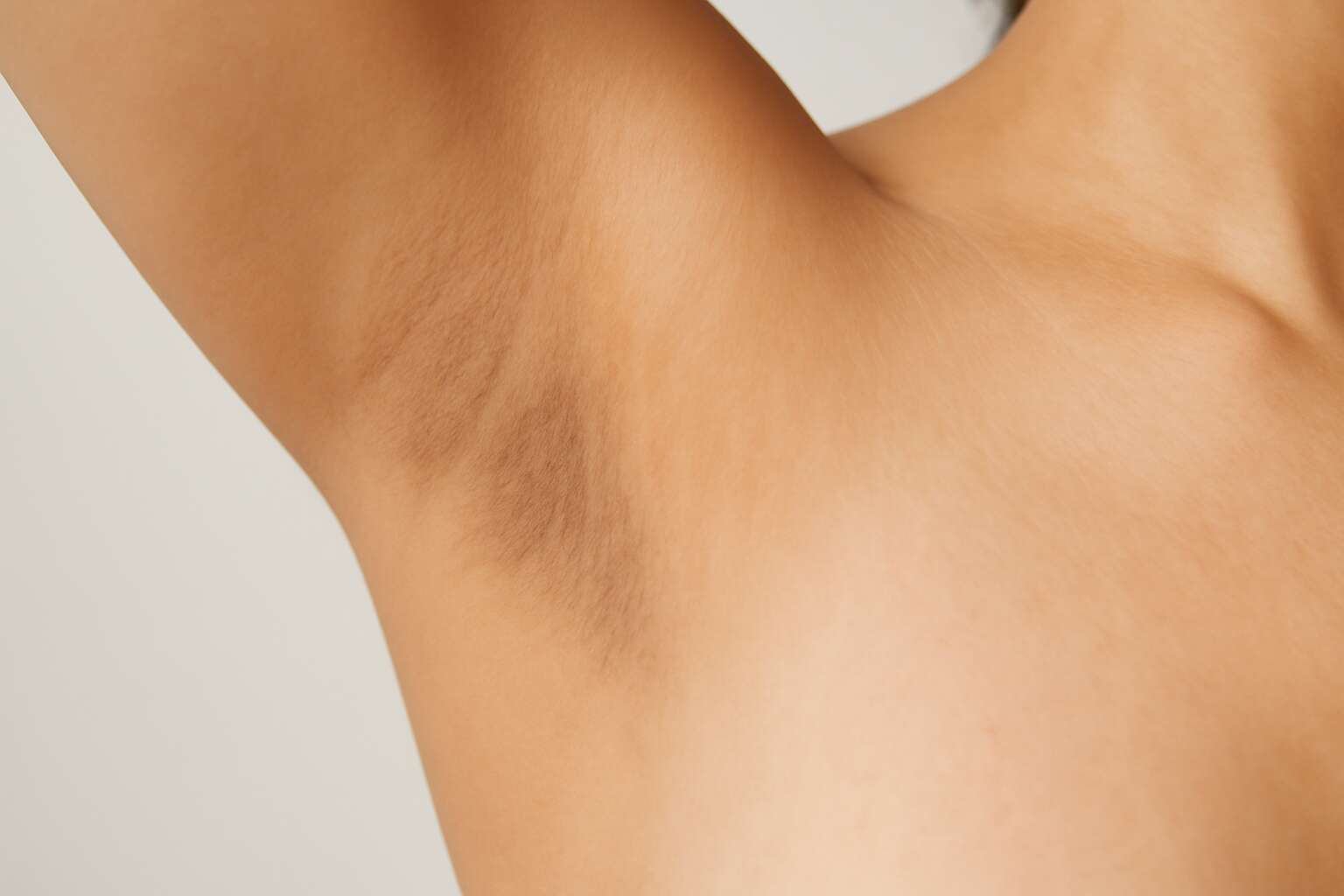
Understanding underarm pigmentation
What causes underarm pigmentation
Shade has a stubborn way of returning where the light fears to tread. In South Africa’s sun-bright days, pigment under arm appears as a common, almost ritual secret—yet its origins are seldom simple. A dermatologist once observed, ‘Discoloration is a natural variation, not a flaw.’ Understanding this truth frees the skin to speak its own language rather than begging for perfection!
From genetics to everyday habits, several forces converge to shape this hue. Common factors include:
- Genetics and natural skin tone variations
- Friction from clothing, shaving, or movement
- Hair removal methods and post-inflammatory changes
- Hormonal shifts that influence melanin pathways
In the armpit, a quiet theatre of sweat glands and hair follicles, I see pigment under arm deepen when irritation lingers or moisture unsettles the skin’s balance. The result is a subtle tapestry rather than a single category, a reminder that skin’s color is as much story as shade.
Common types of underarm discoloration
Across South Africa, roughly a third of adults notice underarm tone shifts at some point. It isn’t a flaw; it’s a natural variation worth understanding. I see pigment under arm as a language your skin speaks. Forms vary: some patches are flat and even, others linger near hair follicles, tracing a map of daily life!
- Post-inflammatory hyperpigmentation (PIH) after irritation from shaving, waxing, or friction
- Friction melanosis from daily rubbing and movement
- Hormonal shifts that influence pigment pathways in the armpit
- Contact dermatitis–related discoloration from products or deodorants
These patterns aren’t one-size-fits-all. Every shade of pigment under arm carries a story—shaped by skin tone, climate, and daily life under the sun. Read that language, not demand perfection, and the skin speaks honestly.
Who is at risk for underarm discoloration
Across South Africa, roughly a third of adults notice underarm tone shifts. If your underarm shade is part of the daily conversation, you’re in good company. Understanding pigment under arm is like learning your skin’s language—one that chatters in melanin, heat, and humidity. Some days the tone is even and flat; other days it hugs the hair follicles, or traces the rhythm of daily movement. It’s not a flaw; it’s a story written in skin.
Who is at risk for underarm discoloration? People with naturally higher melanin in the underarm area, those living in hot, humid climates, and individuals experiencing hormonal shifts or life changes are more likely to notice pigment shifts. This is all about pigment under arm variation and how daily life nudges skin tone without warning.
- Naturally higher melanin in the underarm area
- Residence in hot, humid climates common in parts of SA
- Hormonal fluctuations or life-stage changes that affect skin tone
Symptoms and when to seek advice
Across South Africa, roughly one in three adults notice pigment under arm shifts, a quiet conversation the skin keeps with sun and sweat. Sometimes the tone glides evenly; other days it clings to hair follicles or follows the bend of a whispered arm move. It’s a story written in melanin, humidity, and light.
Symptoms signaling a deeper listen from the skin include:
- Persistent darkening or patches that creep across the underarm
- Irregular borders that seem to spread
- Itching, burning, or tenderness accompanying pigment changes
- Scaling, crust, or the emergence of a new lesion
- Rapid color shifts or swelling that accompany movement or heat
When to seek advice: if symptoms persist, worsen, or come with discharge or a lump, consult a dermatologist for an assessment and what it might mean. Early professional eyes help distinguish benign shifts from concerns needing care.
Causes and risk factors
Friction, shaving, and irritation
Roughly one in three people notice pigment under arm changes at some point. That shift isn’t just cosmetic; it signals how daily habits and skin tolerance interact. Friction, shaving, and irritation are common culprits that darken the underarm area over time, especially when the skin is repeatedly rubbed or sensitized.
Friction, shaving, and irritation are the main risk factors. In South Africa’s heat and long summers, sweat can make rubbing worse and expose skin to more irritation. Common triggers include:
- Rubbing from tight clothing, exercise gear, or shaving against damp skin
- Irritation from deodorants, antiperspirants, fragrances, or hair removal products
- Shaving practices such as dry shaving, dull blades, or exfoliating too aggressively
These factors interact to influence surface tone, reminding readers that even ordinary routines can leave a visible imprint over time.
Hormonal influences and aging
Across South Africa’s sun-soaked days, hormonal tides leave their mark on the skin in quiet, stubborn ways. The body’s endocrine symphony can influence melanin production, nudging pigment under arm into a subtle, persistent presence that daylight and routine don’t erase. It’s not vanity; it’s biology tuning itself to daily life—and the heat adds its own cadence.
As we age, skin turnover slows and melanocytes linger longer in the upper layers, making shade differences more evident. Hormonal shifts across life stages—puberty, pregnancy, menopause—reframe the canvas we carry day after day.
- Hormonal shifts during puberty, pregnancy, or menopause can alter melanin distribution.
- Aging skin changes in elasticity and turnover can reveal accumulated pigment.
- Endocrine conditions or medications can subtly influence skin tone over time.
Post-inflammatory hyperpigmentation triggers
Causes and risk factors for pigment under arm lie in the quiet aftermath of inflammation. Post-inflammatory hyperpigmentation can arise after acne-like eruptions, dermatitis, or even minor trauma to the delicate axillary skin, where sweat and friction mingle. In South Africa’s sun-drenched climate, sun exposure can stubbornly intensify these marks, weaving a tapestry that lingers long after the flare.
I’ve seen such marks endure, a quiet reminder that biology outlives fashion—and sometimes the sun does, too.
- Acne flare-ups or folliculitis near the underarm that trigger lingering melanin
- Dermatitis or eczema inflaming the axillary skin and nudging pigment production
- Injury or chemical irritation from topical products such as certain deodorants or fragrances
- Sun exposure, especially in bright South African sunlight, that deepens existing marks
These triggers remind us that pigment under arm is not a passing scrawl but a memory etched by biology, environment, and time—especially under Africa’s seasonal sun and heat.
Genetic and ethnic considerations
One in three people will notice discoloration around the armpit, a statistic that makes biology look stubbornly loyal. Causes aren’t villains but a chorus of ordinary events—minor inflammation, friction from clothing, and the sun’s stubborn encore. The result is a pigment pattern that refuses to surrender to trends, a quiet reminder that skin records every rub and heat wave.
Genetics and ancestry draft the backdrop. Some heritage lines carry higher baseline melanin in axillary skin, nudging the spectrum toward visibility. This pigment under arm is a familiar refrain in many populations, a reminder that biology often follows lineage and latitude.
- Genetic tendency for higher axillary melanin
- Ethnic background shaping baseline skin tone
- Sun exposure amplifying pigment in exposed skin
Recognition, not judgment, frames these variations as natural diversity.
Lifestyle factors
Causes of pigment under arm are not a single villain; it’s a mix of biology and daily life. Genetics set the stage, but hormones, aging, and even mild inflammation contribute. Environment matters too—sun exposure and seasonal heat can nudge the shade darker in summer months. The pattern is personal, a record of how skin responds to moisture and change over time.
Lifestyle factors tilt the balance. In South Africa’s climate, heat and sweat keep the axillary area moist longer, which can accentuate variation. Choices in deodorants and scents can irritate sensitive skin and subtly intensify discoloration.
- Prolonged moisture and heat in the underarm area from sweating or tight clothing
- Irritants from deodorants, antiperspirants, or scented products
- Body mass index and skin folds that trap moisture
Ultimately, the pigment under arm pattern is a natural fingerprint—shaped by biology and daily life, especially in diverse South African skin communities.
Diagnosis and professional assessment
Clinical evaluation and patient history
Shadows linger in the clinic—an observer maps the tale of pigment under arm that began with a whisper and endures as a quiet mark on the skin. Diagnosis unfolds from listening: when it started, how it has wandered, and what it has touched since. Clinical evaluation and patient history become twin lanterns in a murky corridor.
Under true light, the evaluator checks symmetry, texture, and margins. A Wood’s lamp or dermatoscope may reveal secrets hidden to the naked eye. If doubt lingers, a biopsy or targeted testing may be considered to distinguish it from other conditions.
- Onset, evolution, and progression
- Past treatments and responses
- Family or personal history of pigmentary disorders
- Exposure to irritants, shaving, or friction
Final notes emphasize a careful differential and a faithful record, guiding further care in a context that honours South Africa’s diverse skin tones.
Dermatoscopic and diagnostic tools
Diagnosis in the clinic operates like a careful relay of evidence, where shadows on the skin become stories of the tissue beneath. For pigment under arm, the verdict rests on symmetry, texture, and margins observed in good light, with a trained eye tuning into nuance.
Dermatoscopic and diagnostic tools sharpen that assessment. A dermatoscope teases apart pigment networks, borders, and subtle follicular involvement; a Wood’s lamp can reveal fluorescence that hints at inflammatory versus pigmentary processes. When uncertainty lingers, a biopsy or targeted testing may be considered to distinguish it from other conditions.
- Wood’s lamp examination to detect fluorescence patterns
- Dermatoscopic imaging to map pigment networks and margins
- Targeted testing or biopsy when margins are unclear
In South Africa, clinicians tailor interpretation to our diverse skin tones, ensuring the differential remains precise and compassionate.
When to order lab tests
“Diagnosis is a narrative of light and shadow,” a veteran dermatologist likes to say. In the clinic, pigment under arm becomes a map of tissue and time—symmetry, texture, and margins in bright light tell stories the eye alone cannot fathom. I have watched that story unfold, case by case, and felt certainty rise when the silhouette behaves, and waver when it does not.
Professional assessment blends careful clinical observation with selective testing. When features linger in the grey zone, targeted lab work and focused investigations help separate inflammatory from pigmentary processes, avoiding premature conclusions and guiding the path forward.
- Persistent alteration, new or rapidly evolving pigment patterns, or borders that blur over weeks.
- Suspicion of systemic influences, such as hormonal shifts or immune-mediated changes.
- Inconclusive clinical or imaging findings despite initial evaluation, prompting biopsy or specialised testing.
In South Africa, clinicians tailor interpretation to our diverse skin tones, ensuring the differential remains precise, compassionate, and attuned to the nuances of pigment under arm across communities.
Differential diagnosis: conditions that mimic pigmentation
“Light and shadow tell the truth of pigment,” a veteran dermatologist notes. In the clinic, pigment under arm becomes a map of tissue and time—an invitation to read symmetry, texture, and margins in bright light. Diagnosis blends careful clinical observation with selective testing, never rushing to conclusions. In South Africa’s mosaic of skin tones, clinicians interpret pigment with nuance, discerning genuine pigment from its clever mimics. The silhouette may align with expectations, or it may resist, and each patient adds another line to the evolving narrative.
Within the differential diagnosis, several conditions masquerade as pigment under arm:
- Post-inflammatory hyperpigmentation
- Frictional melanosis from rubbing or irritation
- Acanthosis nigricans in darker skin tones
- Vitiligo or other depigmentation disorders
These distinctions keep the narrative honest, guiding the path forward without haste.
Treatment options and prevention
Over-the-counter topical treatments and ingredients
In South Africa’s radiant light, pigment under arm can feel like a secret kept close to the skin, a shadow that refuses to yield to the sun’s warmth.
Over-the-counter topical treatments offer a careful starting point. Ingredients such as niacinamide, azelaic acid, vitamin C, kojic acid or arbutin, and licorice extract are common choices that aim to brighten while respecting the skin’s barrier. Patch testing and gentle use help minimize irritation, and results typically unfold gradually rather than overnight.
- Niacinamide
- Azelaic acid
- Vitamin C
- Kojic acid or arbutin
- Licorice extract
Prevention emphasizes consistency, mindful care to reduce friction, and sun protection to prevent darkening from exposure, while professional guidance remains important for persistent cases.
Professional procedures and when they are recommended
Addressing pigment under arm isn’t a scandal; it’s pigment—stubborn and lingering. A dermatologist quips, “Pigment is a diva that won’t share the spotlight until the lighting is right.” When OTC regimens stall or timing matters, professional procedures offer targeted refinement. In South Africa, clinicians tailor plans to skin type and pigment depth.
- Laser therapies (Q-switched Nd:YAG or Alexandrite)
- Chemical peels with glycolic or lactic acids
- IPL for pigment and texture improvements
Procedures carry downtime and cost considerations, best reserved for persistent cases or when rapid improvement is desired. Prevention focuses on steady sun protection, gentle cleansing, and avoiding irritants that cause friction, along with mindful wardrobe choices to keep results looking even.
Lifestyle adjustments to prevent recurrence
When tackling pigment under arm, precision trumps panic. In modern clinics, options like laser therapies (Q-switched Nd:YAG or Alexandrite), glycolic or lactic chemical peels, and IPL can refine tone and evening out texture. In South Africa, clinicians tailor approaches to skin type and pigment depth.
These procedures carry downtime and cost considerations and are best reserved for stubborn cases or when rapid improvement is desired.
Prevention leans on sun-smart habits, gentle cleansing, and avoiding irritants that trigger friction, along with mindful wardrobe choices.
- Sun exposure management and sunscreen considerations
- Gentle cleansing practices and fragrance-free products
- Fabric choices that minimize underarm friction
Safety and patch testing for skin products
Spotty underarms can feel like a fashion faux pas, but pigment under arm is more a skin signal than a style flaw. In South Africa, clinicians remind us that steady assessment and a personalized plan beat panic every time.
When considering treatment options, clinics tailor approaches to individual needs, weighing speed against downtime and budget. General modalities aim to refine tone and texture while respecting skin type and depth, with clinicians guiding selection and expectations.
- Patch test before introducing new products on the underarm area
- Choose fragrance-free formulations to minimize irritation
- Consult a clinician for personalized safety guidance
Safety and patch testing for skin products are essential companions to any underarm pigment plan, and sun protection helps keep results stable.




0 Comments