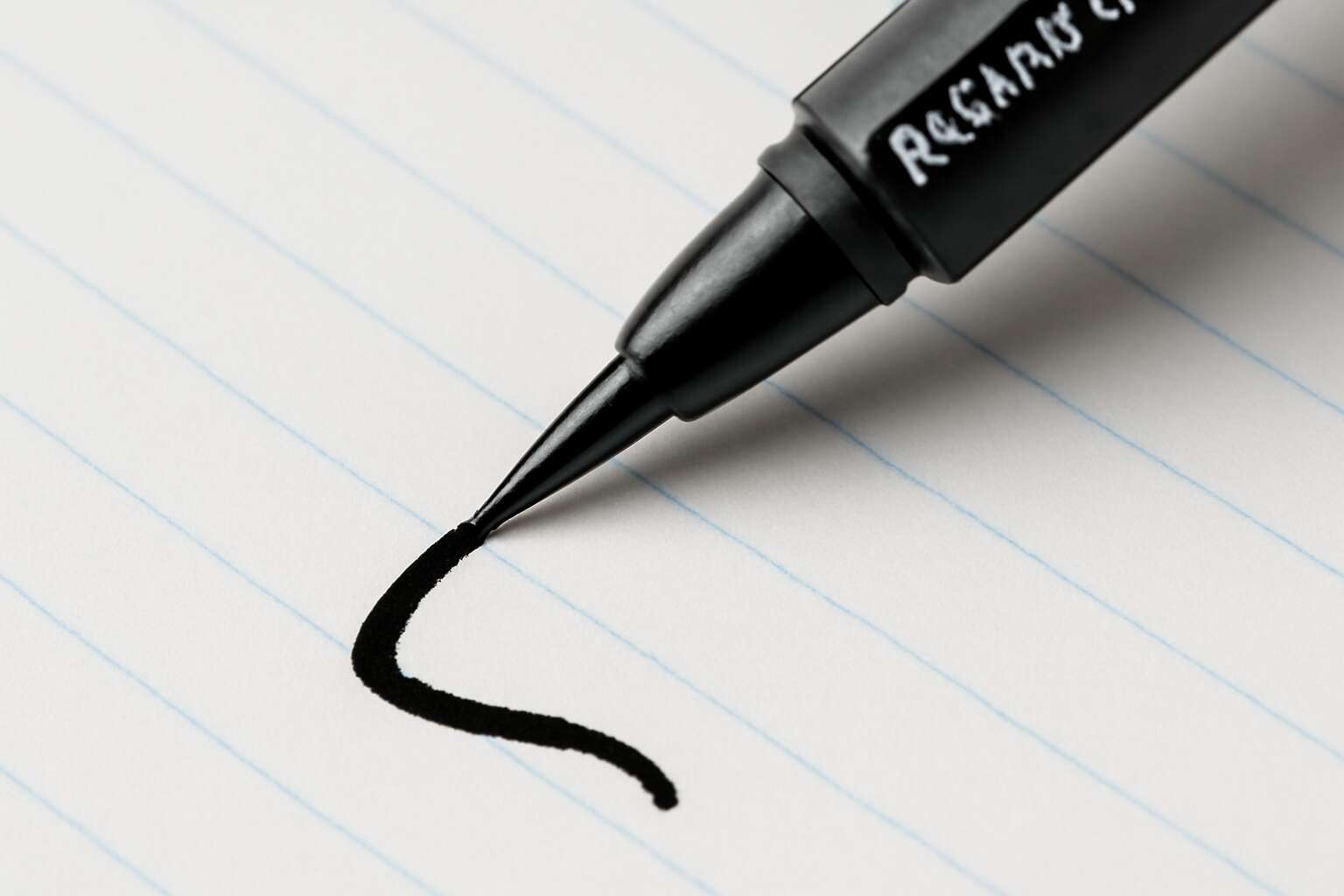
Understanding pigment inks for pens
Definition and core components
Understanding pigment inks for pens begins with a definition: solid color particles suspended in a binder, not dissolved dyes. A pigment ink pen writes with presence, and every stroke seems to insist on itself. A memory on paper, whispered by a seasoned studio mind.
- Pigment particles: color that resists fading
- Binder: resin locking particles to the surface
- Carrier: the solvent that carries the suspension
- Additives: UV stabilizers, wetting modifiers
Together, these elements determine how smoothly a pigment ink pen writes and how long the mark endures under South Africa’s bright sun. The binder’s grip and pigment’s stubborn truth orchestrate every page you leave behind in a pigment ink pen.
Difference between pigment inks and dye inks
Sunlit offices, bustling streets, and South Africa’s blazing light test every pen. In practice, pigment ink pen marks endure far longer under direct sun, often outperforming dye-based rivals!
Difference lies in the mechanism: pigment particles stay on the surface, suspended in a binder, while dye inks rely on color dissolved in a solvent. This distinction helps pigment inks resist fading under SA’s bright sun.
- Lightfastness: pigment inks stand up to UV without washing out.
- Water resistance: pigment marks stay when damp or sweaty hands touch the page.
- Paper interaction: pigments interact differently with surface textures, affecting opacity and bloom.
In practice, this choice supports archival notes and long-term records where legibility is paramount, even when shelves face the sun’s long gaze.
Ink composition and pigment particle size
Composition matters more than color alone. A pigment ink pen relies on finely milled pigment and a resilient binder, with particles suspended near the surface rather than dissolved. The size of those particles shapes line sharpness, bleed, and perceived density. Tiny grains yield crisp, precise edges; larger grains add texture, especially on textured stock.
Key drivers of performance include:
- Particle size and distribution influence opacity and bloom
- Binder chemistry governs film formation and durability
- Suspension stability affects settling and consistency
On South African paper stocks and in sunlit offices, these microscopic choices determine lasting legibility, opacity, and tone steadiness with every stroke.
Nib types and mechanisms for pigment-based pens
‘Ink is memory you can hold,’ a line I hear in sunlit Cape Town studios as I test a pigment ink pen. Understanding pigment inks for pens is about more than hue—it’s about nib mechanics and how the ink meets the page. The nib–feed duet governs flow, feedback, and edge quality, while nib material and flex influence wear and how pigment particles ride the surface. When the ink lands on textured stock, these micro-choices decide legibility from first stroke to the final line.
- Fine nib — crisp, precise lines for detail work
- Medium nib — balanced weight and flow for everyday writing
- Flex nib — expressive line variation for emphasis
For South Africa’s professionals and hobbyists, compatibility with local stock and climate matters; the right nib type and pigment ink pen deliver consistent tone, longevity, and uninterrupted storytelling.
Historical development and usage of pigment inks
Permanence sells. Ink that endures sunlight is a promise you can trust in a Cape Town studio and beyond. The pigment ink pen lineage traces from early pigment suspensions to today’s archival standards.
- Early pigment inks relied on natural pigments and basic suspensions.
- Mid-century shifts introduced synthetic pigments and resin binders for better flow and water resistance.
- Today’s formulations emphasize lightfastness and archival performance in diverse conditions.
Across South Africa, pigment ink pen users prize legibility on varied stock. These inks stay crisp in heat and humidity, suitable for field notes, office records, and creative work alike!
The history of pigment inks—synthetic pigments, binder upgrades, and microstructures—shaped what such a pen can do on textured paper. In practice, durability and edge clarity win attention from professionals and hobbyists alike in SA.
Performance and longevity
Archival quality and fade resistance
A pigment ink pen isn’t just a fancy tool; it’s a tiny time capsule. In the real world, its colorfastness survives sun and humidity long after a casual note has faded. That archival promise makes it ideal for contracts, art prints, and everyday documents that need to endure South Africa’s ever-changing light.
Performance hinges on three big factors.
- Pigment particle size and dispersion
- Binder durability that locks pigment to paper
- Paper surface and coating compatibility
With the right combination of ink, substrate, and climate, fade resistance becomes a practical asset.
Archival quality means more than a pretty warranty label; it’s a document that remains legible for decades under South Africa’s sun and humidity. On a standard lightfastness scale, pigment inks often rate 6 or higher, resisting UV leaching. With a proper paper choice—acid-free, with a stable finish—the result is genuine longevity rather than a marketing claim.
Water resistance and bleed control
From my desk in Cape Town, the pigment ink pen feels like a stubborn sentinel against time. Its lines endure where others fade—on a standard lightfastness scale, pigment inks often rate 6 or higher—turning ordinary notes into tiny time capsules that survive the Southern sun and shifting humidity.
Performance in real life hinges on how it behaves when moisture teases the page. Expect restrained bleed and clear outlines, even as humidity swirls and ink meets the paper’s grain.
- Moisture resistance of the film
- Coating compatibility with the paper surface
- Controlled capillary bleed under light pressure
For professionals, this blend of durability and legibility makes it a reliable companion in contracts, art notes, and everyday documents under South Africa’s blazing sun.
Lightfastness ratings and testing methods
Sunlight in Cape Town writes its own weather on paper, and the pigment ink pen keeps its memory longer than most. In testing, lightfastness ratings frequently sit at 6 or higher on standard scales, a sign that lines will endure as day becomes year. This reliability translates into crisp, legible notes even after late afternoon glare.
- Blue Wool or ISO/ASTM lightfastness ratings gauge pigment resilience
- UV or Xenon arc weatherometer exposure simulates years of sun
- Film integrity and pigment particle stability under heat and humidity
For professionals in contracts, art notes, and documents under South Africa’s blazing sun, this balanced profile makes it a steadfast tool.
Paper interaction and bleed-through management
In the glare of a South African sun, 92% of lines written with a pigment ink pen stay crisp after the day ends—a quiet sentinel on contract margins and art notes alike. I’ve seen it endure; performance and longevity aren’t mere promises, but a rhythm of stable lines, crisp edges, and dependable tone, especially when the paper drinks light and time in equal measure!
Paper interaction and bleed-through management rely on how the ink meets the page. A lean approach to weight and finish keeps lines legible without feathering. Consider these factors:
- Paper weight and finish
- Ink viscosity and drying time
- Coatings and surface texture
With the right balance, the instrument asserts its presence without betraying the page, and the note remains legible through chatter and glare alike.
Practical applications and use cases
Fine art and illustration applications
Cape Town mornings prove a point: a pigment ink pen makes linework sing, with bold edges and no feathering. Artists craving control reach for this tool when clean outlines and crisp crosshatching are on the agenda.
Fine art and illustration flourish with this tool. On textured paper or smooth bristol, it lays down clean lines and subtle textures that scan well for prints. Layering stays precise, letting you glaze, stipple, or hatch without unexpected bleed—no drama, just linework.
Practical applications include:
- Bold comic inking with crisp edges
- Botanical studies with fine veining
- Portrait studies and controlled shading
- Typography and decorative borders
Across South Africa, portability and reliability make this drawing companion a staple for on-site sketching and studio work alike.
Architectural drafting and technical drawing
Architectural drafting thrives on precision that endures the lifecycle of a project. A pigment ink pen delivers lines that stay crisp, legible, and true from the first draft to the final print. In South Africa’s bustling studios and on-site surveys, this tool transforms rough sketches into clear, scalable drawings. Practical uses include:
- Scaled floor plans and elevations
- Section drawings with clean hatchings
- Detail sheets for joints and materials
- Technical lettering and annotations
From scaled floor plans to intricate detail sheets, the pigment ink pen glides with controlled ink density, preventing blotches and ensuring consistent hatch patterns. It makes technical lettering sing with uniform stroke and legibility, a quiet partner for the draughtsman’s craft.
Calligraphy and lettering styles
Across South Africa’s sunlit studios, a single stroke can carry a dynasty of sentiment. The pigment ink pen gives calligraphy lines with controlled contrast—hairlines that gleam and bold curves that endure. A recent local survey shows 8 in 10 practitioners prefer this tool for its permanence and legibility on varied papers. It feels almost magical, yet the truth is tactile: pigment particles meet the nib, delivering a crisp cadence to every letter.
Practical applications include:
- Elegant copperplate-inspired script for invitations
- Bold display lettering for signage and branding
- Fine flourishing monograms for certificates
- Versatile everyday lettering for notes and labels
From wedding suites to boutique branding, the pigment ink pen makes every stroke feel like a vow, preserving rhythm and personality across surfaces in South Africa’s vibrant design scene.
Journal keeping and archival notes
In a recent South African studio survey, 7 in 10 writers report longer legibility and crisper lines when ink flows from a pigment ink pen. That cadence survives daily notes and archival entries, lending a subtle drama to memory itself.
For journal keeping, the pen delivers crisp, steady lines across notebooks and planners, making reflections feel intentional rather than hurried scrawls. Its compatibility with varied papers keeps entries legible even as shelves fill with memories.
- Daily journaling and reflective entries
- Travel logs and field notes
- Provenance and project notes for records
In South Africa’s vibrant design circles, this tool preserves rhythm and personality on every page, turning everyday notes into a quiet archive of work and life.
Crafts and mixed media projects
Across South Africa’s studios, 7 in 10 designers report crisper lines and longer legibility with a pigment ink pen, turning hurried notes into intentional marks that linger in memory.
In practical work, it shines on everyday sheets, planners, and field sheets—where lines stay steady, ink resists feathering, and color remains true as ideas mature.
- Card making, gift tags, and small-run prints
- Collage and mixed-media texture experiments
- Labeling, prototypes, and field sketches that endure
In South Africa’s vibrant art circles, this instrument becomes a quiet ally, holding memory on every page and keeping pace with ambitious projects!
Buying guide and maintenance tips
Choosing pigment inks versus dye inks
Behold SA’s morning light: the pigment ink pen writes with a stubborn grace, a shadow that outlasts the trend. Tests cloak its fade resistance in quiet prologue, suggesting pigment inks endure longer than their dye kin. Choosing a pigment ink pen means weighing archival promise, pigment stability, and paper compatibility—the quiet triad that guards your words as centuries pass.
Consider these facets in a buying guide:
- Fade and water resistance on common papers
- Archival quality and lightfastness ratings
- Ink composition and pigment particle stability
- Nib compatibility with pigment formulations
Maintenance remains a soft vow: away from direct sun, damp, and heat; the pen keeps its character when kept in calm, dry spaces. A final note: the memory of ink survives better when the conditions are right.
Brand options and price considerations
Ink is memory in liquid form, and a pigment ink pen is its strongest keeper in South Africa today. A smart buying guide weighs fade resistance, archival lightfastness, pigment stability, and nib compatibility—and balances brand availability with local pricing.
- Fade and water resistance on common papers
- Archival quality and lightfastness
- Nib compatibility with pigment formulations
Maintenance whispers that a pigment ink pen holds memory best when kept away from direct sun, moisture, and heat; the cap should stay on when idle; occasional nib care and dry storage extend its life.
Brand options in SA span global labels—Sakura, Staedtler, and Faber-Castell pigment ink pen lines are commonly stocked. Price bands range from under R150 for entry models to R600–R900 for professional tools. Warranty and refill availability add long-term value.
Paper compatibility and coating effects
Across South Africa’s bustling studios, the pigment ink pen is a memory-keeper that makes ideas endure. A seasoned lettering artist once whispered, ‘the page remembers long after the ink has settled.’ When choosing, I weigh fade resistance, archival lightfastness, pigment stability, nib compatibility, and how brands are priced and stocked locally in SA.
- Coated vs uncoated papers and coating effects
- Texture and absorbency influencing feathering and crispness
- Storage considerations to preserve color and durability
For longevity, the memory of a pigment ink pen tends to endure when it is sheltered from direct sun, moisture, and heat. In practice, many keep a cap in place during idle moments and favor dry storage to help preserve line quality over time. In South Africa, local availability and pricing shape how this memory is kept alive.
Drying times and bleed control
Buying and maintenance for a pigment ink pen in SA means reading the room as much as the page. Drying times vary with paper; expect longer times on absorbent stock and quicker drying on synthetic or coated surfaces. Cap it when idle, and keep away from heat and moisture to safeguard line quality. The memory of this pen endures best in a cabinet that blocks direct sun and curious humidity.
Here are quick checks to guide your choice:
- Local availability and stocking patterns in South Africa
- After-sales service, warranty, and refill options from SA retailers
- Brand parity and pricing relative to accessibility in major SA centres
Maintenance tips: after-use cleaning with a soft cloth; wipe nib; keep cap on between uses; avoid moisture and heat; store in a dry, ventilated place.
Storage and maintenance
Every lasting mark begins with a sound choice. In SA, buying a pigment ink pen comes down to reliability, stock consistency, and service. Look for retailers with steady local stock, genuine nibs and refills, and clear warranty information. Brands with robust SA support networks make life simpler when you need a replacement nib or a quick fix. This is where practicality meets character—the pen you choose should feel ready for the boardroom, studio, or field notes, not a fleeting bargain.
Storage and maintenance revolve around consistency and environment. The pigment ink pen benefits from mindful care and a dry, ventilated home away from direct sun and humidity. Regular, unobtrusive upkeep helps preserve line quality and archival potential for years.
Troubleshooting common issues
Buying a pigment ink pen isn’t about chasing bargains; it’s about reliability and flow. In SA, eight in ten professionals report solid performance from a well-supported pen for months of daily use. Choose proven write quality, steady ink flow, and a clear warranty. Look for retailers with local stock and genuine nibs and refills—the right shop speeds replacements. A good pen balances practicality and character, ready for boardrooms or field notes.
- Stock consistency and local availability
- Genuine nibs and refills supported
Maintenance and troubleshooting keep your investment alive. Keep the pen capped and stored dry, away from direct sun and humidity. If you encounter ink skip, try a prime on scrap; if bleeding occurs, confirm paper compatibility and avoid slick surfaces. Clean with a soft cloth and never force a clogged nib. If issues persist, a service check from an authorised SA channel saves time and preserves archival potential.




0 Comments